



A Full Hotel Doesn’t Necessarily Mean a Win: STR and the Puzzle of Accurately Measuring Growth of Vietnamese Hotels
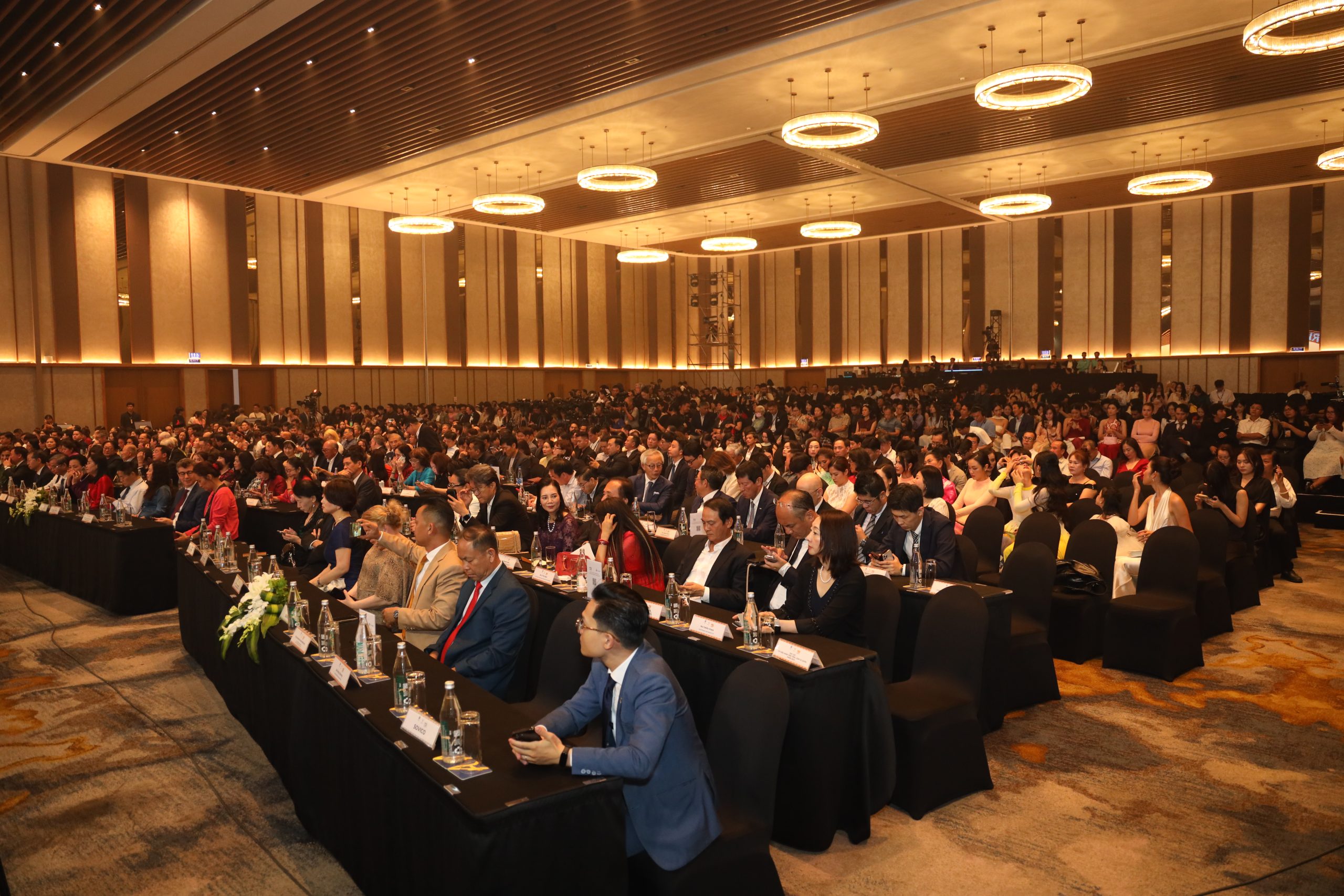
A hotel ends the month with 80% occupancy. That might be a satisfying number. But if competing hotels in the same segment are reaching 88%, the picture immediately changes. In a rapidly growing tourism market like Vietnam, the question for businesses is no longer simply “are we growing?”, but “are we growing faster or slower than the market?”. This is also the issue that data from STR | CoStar Group can help hoteliers see more clearly at HORECFEX VIETNAM 2026.
Vietnam enters 2026 with a notable foundation of tourism demand. In the first seven months of the year alone, the country welcomed approximately 13.9 million international arrivals, up 13.8% over the same period, equivalent to more than half of the annual goal of 25 million international visitors. July alone recorded about 1.67 million international arrivals.
From the demand side, this is a positive signal.
But the hotel market is not determined by demand alone. The other side of the equation is the number of existing rooms and rooms about to enter the market. According to the Vietnam National Authority of Tourism, by the end of March 2026, the country had more than 801,000 accommodation rooms, with 299 establishments in the 5-star hotel group alone.
New development plans continue to be announced. In July 2026, Accor and Sun Group signed an agreement expected to add 5,300 hotel rooms to Accor’s portfolio in Vietnam, with some of the first projects in Da Nang and Phu Quoc. CoStar states that Vietnam is now Accor’s third-largest market in Asia in terms of the number of hotels.
Demand is rising. Investment is also continuing.
And it is precisely in the space between these two movements that the impressive figures regarding visitor numbers or occupancy rates need to be read more carefully.
Is 80% occupancy really a good result?
In hotel operations, occupancy is often one of the first numbers looked at.
But 80% itself doesn’t say much on its own.
Suppose a hotel reaches 80% occupancy in a month. If the competitive set only reaches 70%, the business is attracting a better share of demand than the market. Conversely, if the competitive set reaches 88%, the same 80% figure shows that the hotel is capturing a lower share of demand than surrounding establishments.
Room rates are similar.
ADR – Average Daily Rate – increasing by 10% compared to the previous year sounds positive. But if the competitive set increases by 15%, the hotel may still be losing its pricing advantage. RevPAR – Revenue Per Available Room – can increase in absolute terms while the hotel’s relative position declines.
This is why benchmarking becomes a crucial part of hotel data.
STR doesn’t just look at a hotel’s Occupancy, ADR, or RevPAR. Indices like MPI compare occupancy, ARI compare ADR, and RGI compare RevPAR against a competitive set or the market. In this system, a score of 100 represents “fair share”; above 100 indicates the hotel is achieving a higher share than the comparison group, while below 100 indicates the opposite.
This seemingly technical difference actually leads to a very important business question:
Is the hotel growing because the business itself is performing better, or simply because the entire market is on the rise?
A rising market doesn’t mean every hotel benefits equally
This is also one of the points HORECFEX raises when introducing this year’s market data session: a growing market does not mean every hotel in that market benefits equally. Occupancy, ADR, and RevPAR are only truly useful when businesses understand the story behind the numbers.
This is even more noteworthy when looking back at the data presented by STR at HORECFEX 2025.
In Da Nang, occupancy at that time was recorded in the 60–70% range, higher than the average for the 2013–2019 period; peak season ADR fluctuated around 120–140 USD. The data also showed that occupancy was rising faster than room rates, reflecting strong demand for accommodation while new supply at that time had not yet increased too rapidly.
A year later, the question of interest is no longer just how far the market has recovered.
If visitor numbers continue to rise while new supply is also added, businesses must look deeper into the growth rate of demand versus the growth rate of rooms, the absorption capacity of each segment, and the pricing power of each market.
A resort might sell more rooms but have to lower prices to achieve occupancy.
Another hotel might proactively maintain lower occupancy but sell at a significantly higher rate.
A new project might enter exactly when demand is surging. But that same project, if it becomes operational when thousands of other rooms open simultaneously, will face a completely different challenge.
Therefore, “the market is doing well” is not yet enough information to make an investment decision.
.
From the question “is the market growing?” to “where is the growth located?”
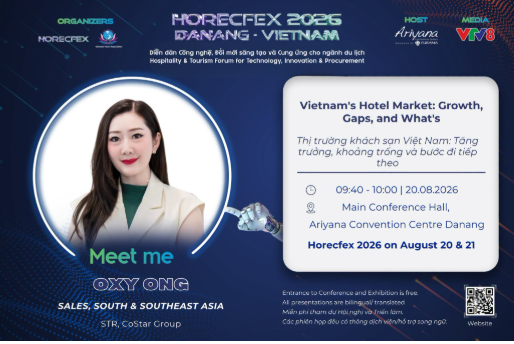
This is what makes the participation of Ms. Oxy Ong, representative of STR | CoStar Group in charge of South Asia and Southeast Asia, at HORECFEX VIETNAM 2026 noteworthy.
Her session is built around the theme “Vietnam’s Hotel Market: Growth, Gaps, and What’s Next” – Vietnam’s Hotel Market: Growth, Gaps, and What’s Next. According to HORECFEX, the content not only examines the performance of the Vietnamese hotel industry but also delves into new opportunities, structural challenges, prospects for urban and resort markets, and places Vietnam in correlation with other destinations in Southeast Asia.
Placing Vietnam alongside the region holds special significance.
An ADR of 150 USD cannot be judged as high or low without context regarding the product, market, and competitors. A destination growing by 10% also carries a different meaning if competing destinations are only growing by 3%, or conversely, are growing by 20%.
Benchmarking, therefore, takes businesses out of their own “rearview mirror.”
Instead of just asking how much revenue increased this year compared to last, hotels can ask harder questions: are we gaining more market share; are competitors raising prices faster or slower; which days of the week still have potential; which segments are generating demand; and is our growth truly outperforming the market?
STR has a large enough data scale to perform such comparisons. According to CoStar Group, STR currently aggregates data from approximately 94,000 hotels, equivalent to 12 million rooms in over 190 countries, serving benchmarking and analysis activities for hotel brands, operators, owners, and investors.
But big data is not the ultimate value.
The value lies in the decisions made after reading the data.
Raise prices, maintain occupancy, or invest more?
For a revenue manager, market signals can lead to a decision to adjust prices.
For a general manager, it can influence the allocation of group, leisure, or corporate guests.
For an owner, data can impact decisions on renovation, expansion, or product repositioning.
And for an investor facing a new project, the question is much larger: what should be built, where, and when?
HORECFEX itself places these questions into the content of this year’s STR session: which locations are suitable for new projects, which segments still have potential, what price points accurately reflect demand, how new supply might impact the market, and how guest behavior is changing.
This is also when figures for international arrivals or new room numbers truly become meaningful.
13.9 million international arrivals in the first seven months are a signal of demand strength. More than 801,000 accommodation rooms show the scale of existing supply. A single agreement adding 5,300 rooms for an international group shows that investment confidence is still present. But none of those numbers, on their own, can answer whether a specific project should be built or a specific hotel should raise its prices.
Decisions only begin to become clearer when those data points are placed side-by-side.
Vietnam is moving toward a different question of growth
After many years where the story of Vietnamese tourism was tied to the recovery of visitor numbers, 2026 is beginning to show a different context.
In January 2026, Vietnam recorded nearly 2.5 million international arrivals in a single month, the highest level ever recorded at the time of announcement. By the end of six months, the figure reached 12.3 million arrivals, up 14.9%; after seven months, it was 13.9 million.
Thus, the question “have the visitors returned?” is becoming less and less valuable.
The questions behind it are the ones that are hard to answer: which visitor markets is growth concentrated in; which destinations are benefiting the most; how much potential remains for luxury, upper upscale, or other segments; at what rate will new supply be absorbed; and which businesses are growing faster than the market itself.
This is also the gap between tourism growth and hotel business efficiency.
A destination can welcome millions more visitors, but not every hotel has the same guest mix, price point, distribution channel, or product to benefit equally.
Therefore, what businesses need is not just more data on market size. What is more essential is the ability to know which data is relevant to the decision they are about to make.
HORECFEX: before asking what technology to invest in, you need to know what problem you are solving
This point creates a clear link between STR and the structure of HORECFEX VIETNAM.
At an event where businesses can access robots, artificial intelligence, management systems, projection technology, operational solutions, and many new product groups, it is very easy to start with the question: “Which technology is worth investing in?”
But perhaps the question that must come before that is:
“What problem does the business need to solve?”
A hotel losing its pricing advantage needs a different decision than a hotel with weak occupancy. A market with rapidly rising demand but limited supply creates a different investment context than a market preparing to welcome thousands of new rooms. A resort wanting to develop MICE also needs to read different signals than a city hotel dependent on corporate guests.
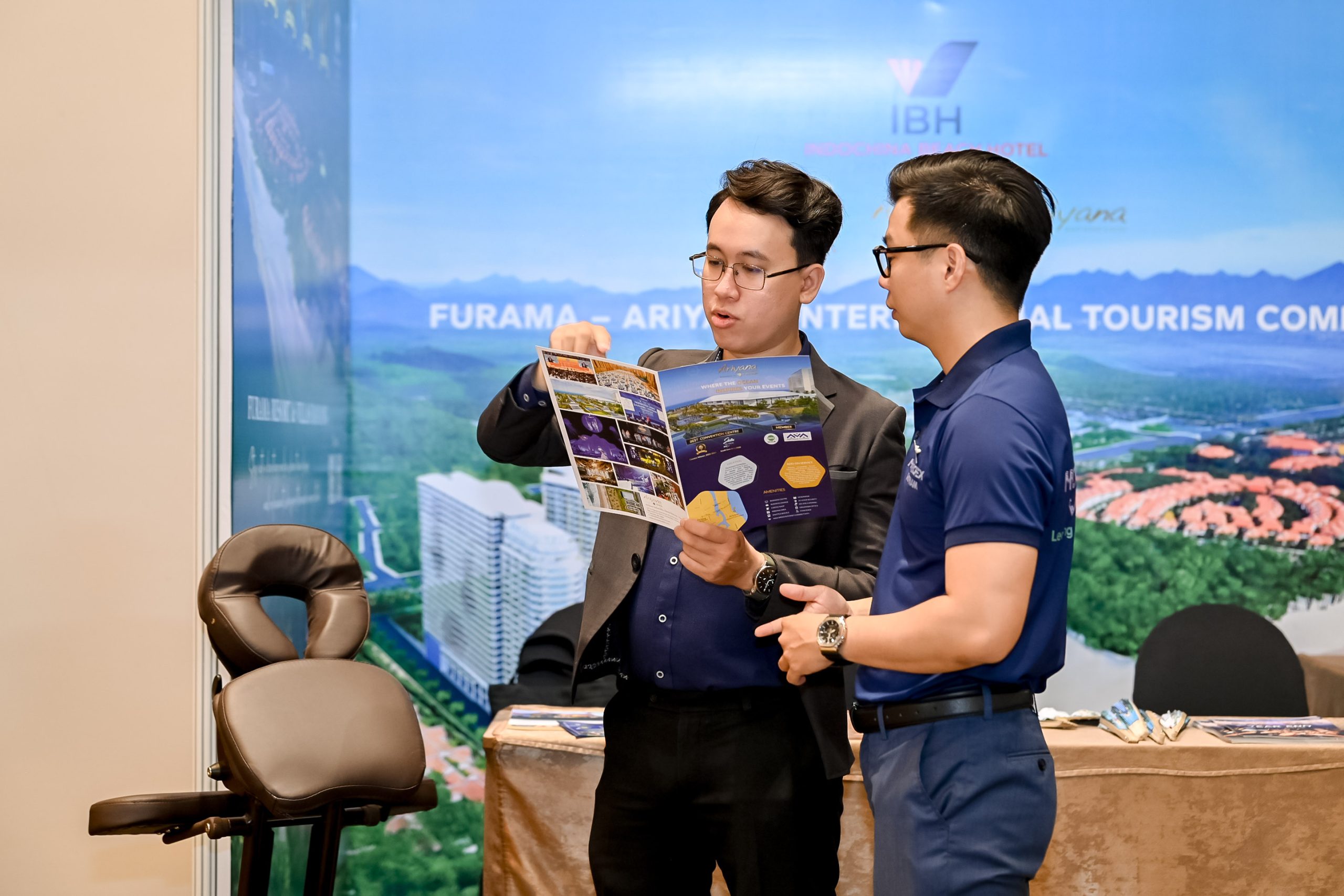 From this perspective, STR data becomes a distinct part of the Knowledge pillar at HORECFEX.
Knowledge does not stand apart from Technology or Supply. It helps businesses know where they stand before choosing what to buy, where to invest, or which direction to change.
HORECFEX can bring a new solution to a hotel executive. But market data helps the executive ask the more important counter-question: is this solution suitable for the business’s position and the trend the market is heading toward?
That is also why a data session can be just as valuable as a technology demonstration area.
It’s not the hotel with the most data that wins
The hotel industry has never lacked numbers.
Occupancy, room rates, RevPAR, revenue, booking pace, length of stay, guest source, distribution costs, forecasts… every day a hotel can generate a wealth of data.
The harder part is knowing which number is actually sending a signal.
Rising occupancy can be a good result, but it can also come from deep discounting. High ADR can show pricing power, but it can also come with losing a portion of demand. Rising RevPAR can be worth celebrating, but if competitors are rising faster, the hotel is still losing ground.
Therefore, the advantage does not necessarily belong to the business with the most data.
It may belong to the business that reads its position in the market sooner, understands what is changing, and makes decisions before those changes become obvious to everyone.
That is also the question worth anticipating from STR’s perspective at HORECFEX VIETNAM 2026.
It’s not just about how much the Vietnamese hotel industry is growing.
But rather where the growth is located, who is truly benefiting – and what signal the next move should be based on.
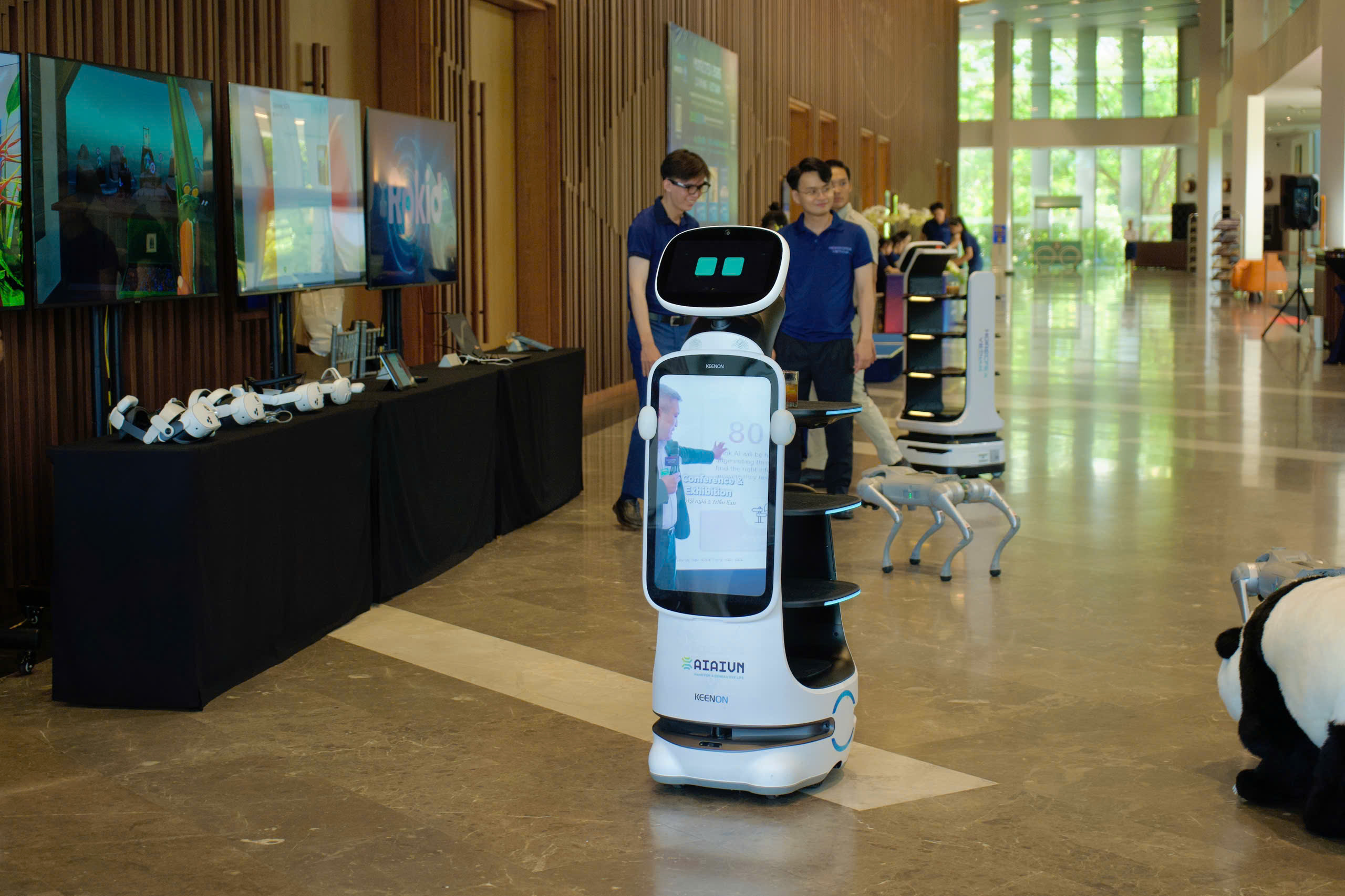
Amid the AI and robot craze, the horeca industry needs a place to know which technology is really worth investing in
Artificial intelligence can answer guests, robots can serve food, smart glasses translate conversations right before your eyes, and virtual reality allows buyers to step into a villa while still thousands of kilometers away. Technology for the hotel and restaurant industry has never been as abundant as it is today. But with more choices, one question becomes harder to answer: which technology is truly worth the money, time, and resources for a business to implement? In this context, the fact that HORECFEX has been certified by the Vietnam Hotel Association as the largest annual forum on applied technology in the HORECA industry in Vietnam not only speaks to the scale of the event but also shows an increasingly clear market demand: the industry needs a regular meeting point where technology is placed alongside practical operational problems before becoming an investment decision.
Technology in hotels was once a relatively easy scope to define. Businesses invested in management systems, reservation software, in-room equipment, or digitized a few processes and could quite quickly visualize which department that technology served.
The current picture is much more complex. AI is moving from chatbots answering questions to systems capable of processing multiple workflow steps. Robots are stepping out of demonstrations to appear in lobbies, restaurants, and operational areas. Smart glasses bring data and translation directly into the line of sight. Virtual reality, spatial computing, projection technology, automation, and data platforms are constantly opening up new possibilities.
The problem for businesses is therefore no longer a lack of technology to choose from. On the contrary, the challenge increasingly lies in choosing among too many technologies that all promise to make hotels smarter, faster, and more efficient.
New technology is not necessarily the technology a business needs
A receptionist robot might impress during a few minutes of demonstration, but does a hotel that already has an efficient front-desk team really need to invest in it? An AI system can analyze large amounts of data, but if internal data is still fragmented, is the business ready to use it? Projection Mapping can completely transform the look of a ballroom, but if the frequency of events is low, is that investment reasonable?
The same solution might be very suitable for a resort with hundreds of rooms but become redundant for a small-scale hotel. A technology that creates clear efficiency for a restaurant chain might not necessarily solve the problems of an independent establishment. Even when the technology works well, businesses still have to consider integration capabilities, operating costs, personnel training, maintenance, and return on investment time.
This is the part that is easily overlooked when the market constantly talks about “the latest technology.”
HORECA professionals don’t just need to know what a solution can do, they need to know if it is worth doing for them.
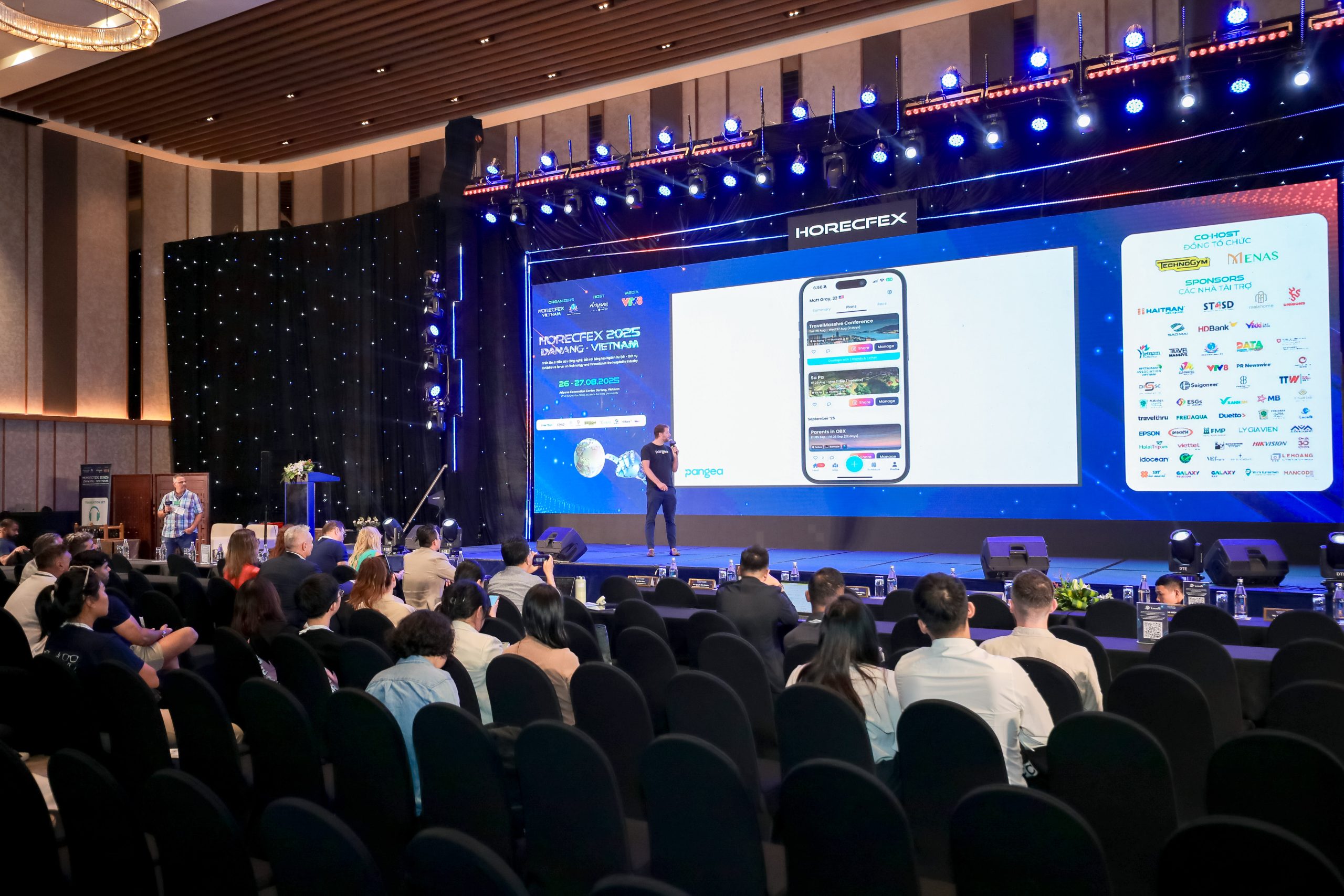
It is precisely the gap between those two questions that creates the reason for a specialized technology forum to exist. HORECFEX doesn’t need to decide for the business which product is best; the value lies in creating an environment where technology can be seen, tested, questioned, and placed alongside the real needs of the people who will use it.
“Annual” and “Applied” are more important than a title of scale
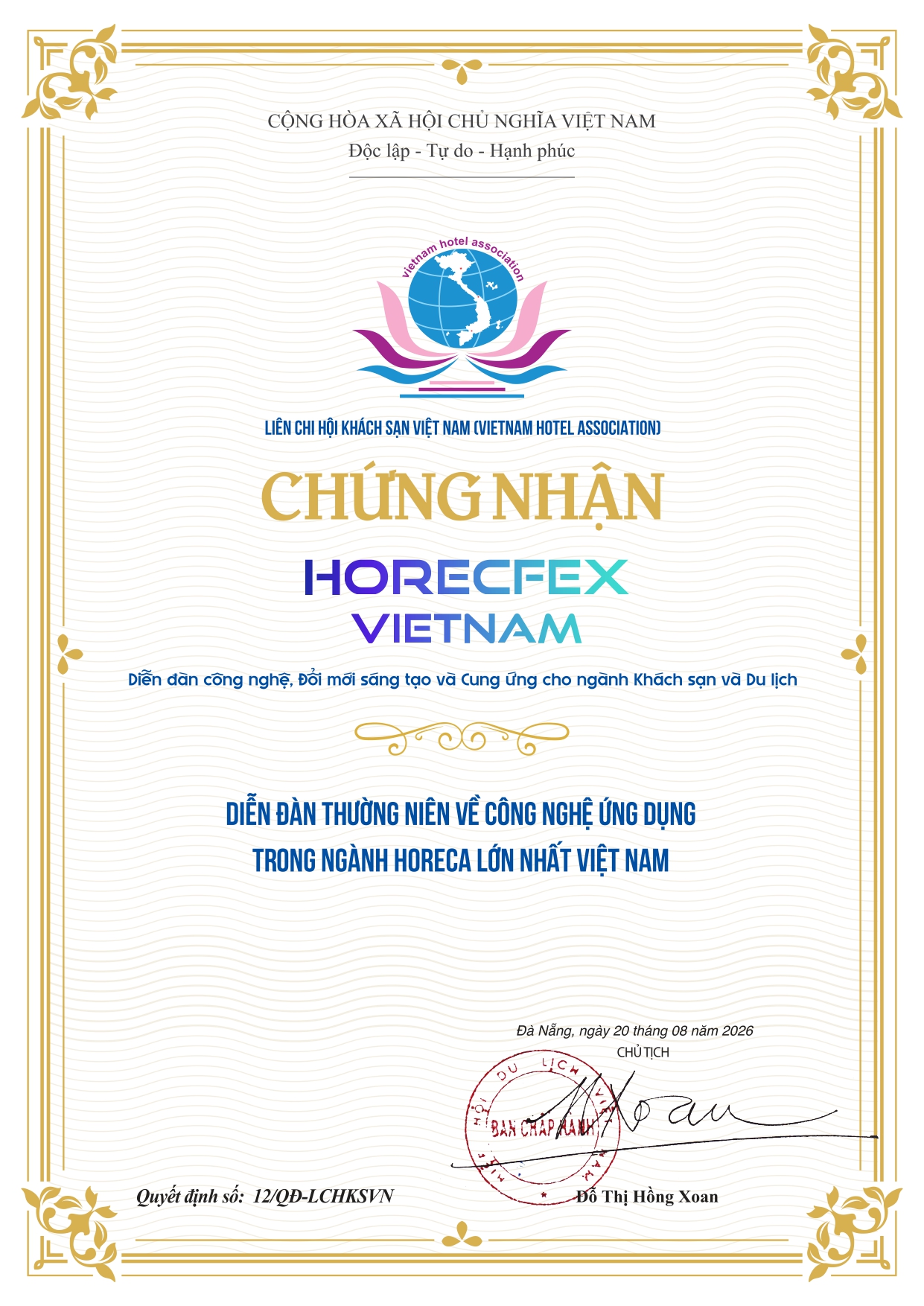
The fact that the Vietnam Hotel Association certified HORECFEX as the largest annual forum on applied technology in the HORECA industry in Vietnam holds special significance in two elements: “annual” and “applied.”
Technology changes too fast for businesses to update just once and then use the same set of knowledge for many years. A solution still in the testing phase today could become a common tool next year; conversely, a trend that was talked about a lot could reveal its limitations when entering real-world operations.
Therefore, the industry needs a meeting point that is updated periodically. Not to chase a new “trend” every year, but to look back and see what has actually moved from trend to application, what is just beginning to form, and what lacks sufficient grounds for investment.
The “applied” factor is equally important. A technology exhibition can show viewers new equipment. But for a hotelier, the question only begins to become valuable when that equipment is placed into a work shift, into a restaurant’s peak hours, into a lobby with dozens of guests waiting to check in, or into a ballroom that needs to be constantly transformed according to customer requirements.
That is also where the voice of a professional organization like the Vietnam Hotel Association becomes noteworthy. Suppliers understand their products, but it is the operators who best understand what happens when that product enters a real hotel.
An application forum needs both sides.
HORECFEX is where technology must answer harder questions
One of the most notable values of HORECFEX lies in the fact that technology is placed in front of exactly the people capable of asking it questions very different from those of an ordinary visitor.
Investors care about efficiency and payback time. General Managers look at the impact on the entire operation. The IT department asks about integration capabilities. Revenue management wants to know if the solution creates additional business value. HR is concerned with how the team needs to be retrained. Front-of-house and F&B staff look at speed, convenience, and guest reactions.
The same product, but when passed through these perspectives, the question “what’s new in technology?” quickly becomes “what problem does the technology solve?”
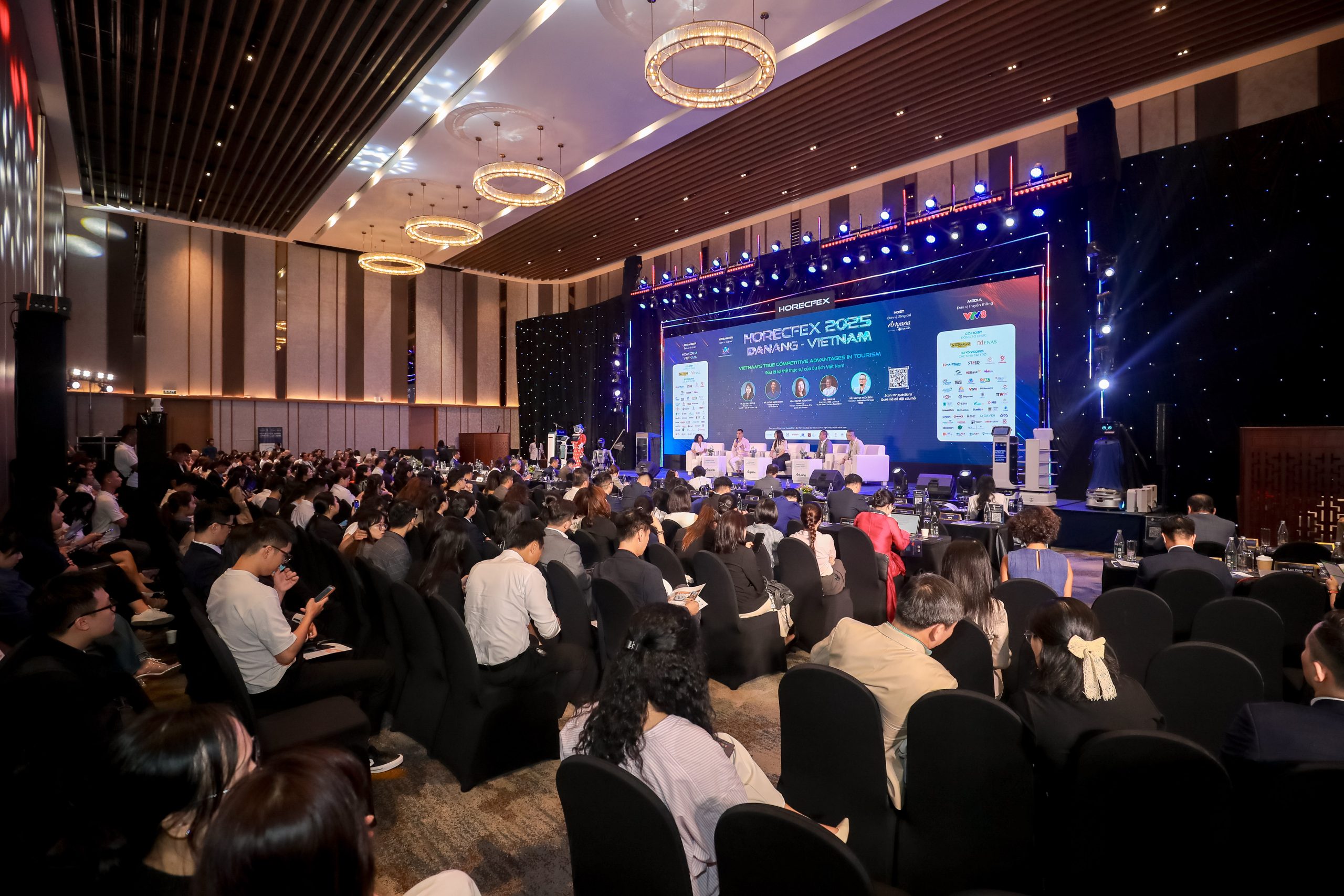
HORECFEX VIETNAM 2026 is clearly showing that approach. Rokid smart glasses are placed in the context of translation and displaying information within the line of sight. Meta Quest 3 is used to bring viewers into a 360-degree space. Unitree robots are viewed from the perspective of patrolling and safety; OrionStar approaches the problem of reception and multilingual communication; KEENON goes into service and transport tasks in restaurants.
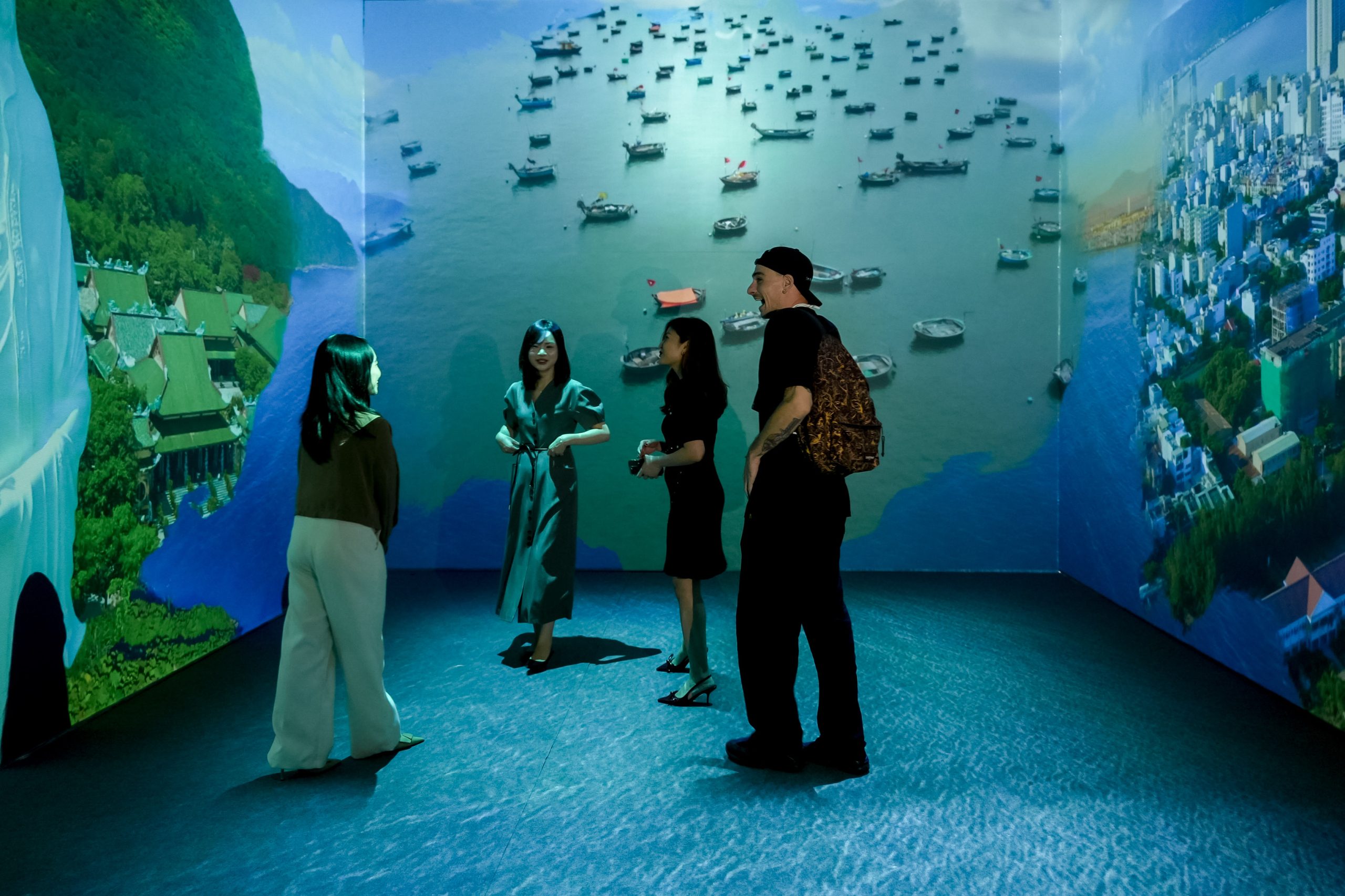
Projection Mapping also doesn’t just appear as a light show. For MICE or resort professionals, this technology suggests the possibility of transforming ballrooms, facades, or event spaces without having to change the physical structure.
The important thing is not whether those technologies are impressive. Greater value emerges when attendees begin to imagine how they will work in their own business.
A service robot is only truly evaluated when the operator looks at the aisle width, peak hour speed, and how it coordinates with staff. Translation glasses are only worth considering when placed alongside the number of international guests the team is serving. A virtual reality tour only becomes a business tool when it helps a buyer abroad get closer to a venue selection decision.
This is the shift from “interesting technology” to “usable technology.”.
Technology cannot be evaluated if separated from the market, people, and business
This is also why a forum for HORECA technology cannot just have AI, robots, and equipment.
A hotel might see a very attractive automation solution, but before investing, it still needs to understand where market demand is going. An investor needs data before deciding to expand. A business wanting to use robots still has to determine which tasks should be assigned to machines and which should be kept for humans. A modern operating system also doesn’t create much value if guests don’t know about the product or if the sales process still has many bottlenecks.
That is why at HORECFEX, perspectives on market data, traveler behavior, human resources, technology, operations, and supply need to be placed side by side.
STR can help businesses understand the market and competitive position. Google and TikTok show how guest discovery and search behaviors are changing. Technology providers bring new operational solutions. Hoteliers bring practical questions from their own businesses.
When those perspectives meet, technology is no longer evaluated only by technical specifications.
It is placed into a larger problem: what does the business need to change and is technology really the right way to create that change?
From that perspective, the theme of HORECFEX VIETNAM 2026 – “ALL YOU NEED – Knowledge, Technology, Supply, and Connection” – reflects a clear chain of decisions. Knowledge helps define the problem and market context; Technology opens up new ways to solve it; Supply brings solutions into the realm of implementation; and Connection helps those with a problem meet the right people capable of solving it together.
No single factor truly realizes its value when standing alone.
A good technology forum doesn’t necessarily make businesses invest more
AI will continue to develop. Robots will become increasingly flexible. Smart glasses, spatial computing, and technologies that haven’t appeared today will continue to enter the hotel and tourism industry.
Businesses cannot stay out of all that change, but they also cannot chase everything.
And perhaps this is a more appropriate measure for the role of HORECFEX.
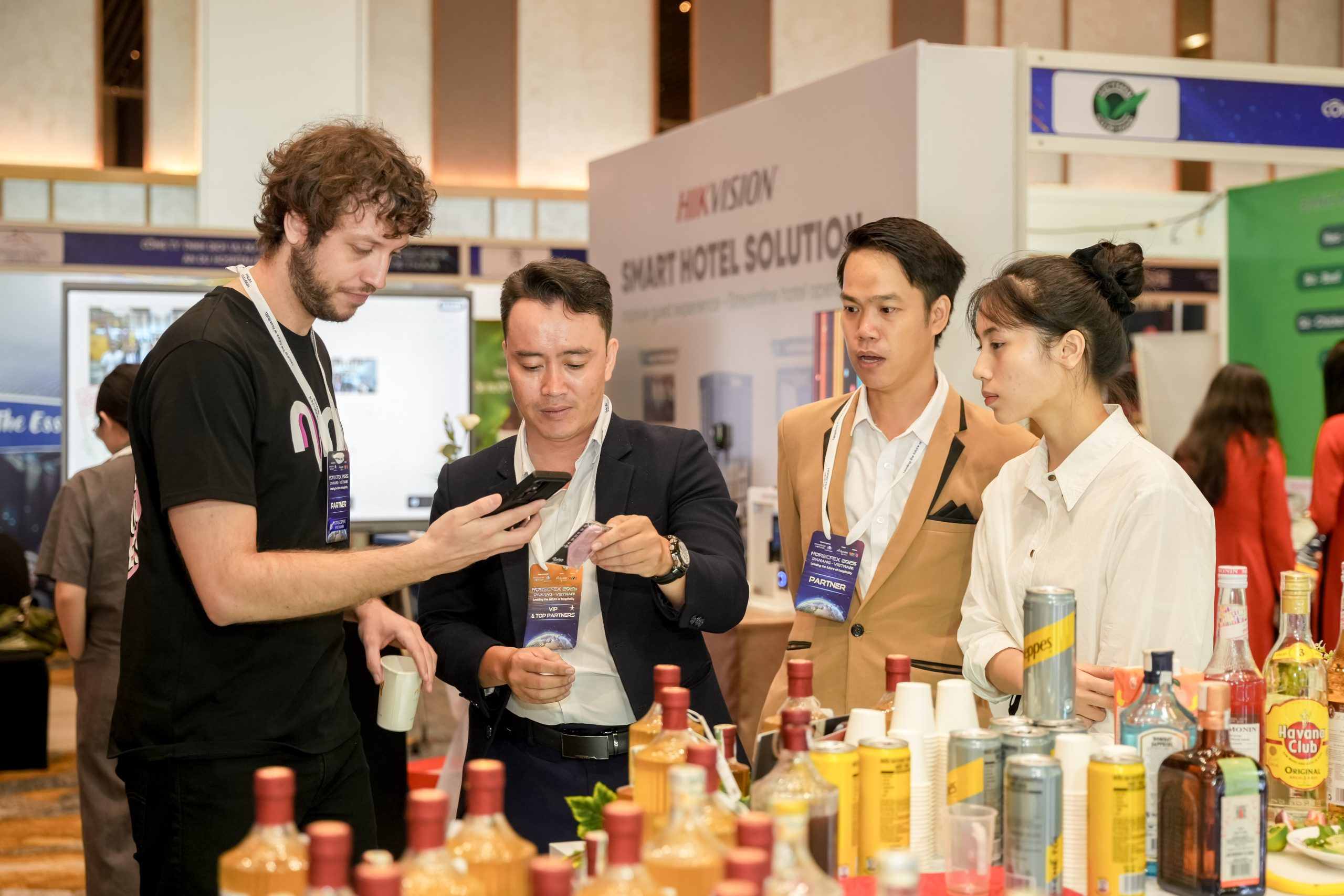
It’s not about how much technology is brought in. It’s not about how many new devices make viewers stop. It’s not even necessarily about how many contracts are signed within the two days.
A good technology forum can create value through non-investment decisions: when a business realizes a solution is not yet suitable, when a hotel owner understands they need to fix their processes before buying more technology, or when an executive discovers another problem more important than what they were planning to spend money on.
In other words, the value lies not in making the industry buy more technology.
From new technology to the problem of effective integration
That question will also be brought directly into Technology Integration Forum I, with the theme “Driving Successful Technology Integration”, taking place from 13:30 – 16:15 on August 20 at the Main Hall within the framework of HORECFEX VIETNAM 2026.
The session goes from how Meta platforms are being applied in the Hotel – Tourism industry, new growth drivers of the market with TikTok Vietnam, to an increasingly important question for businesses: is the hotel really ready for AI? Because bringing a new technology into operation is not just about buying more software or equipment, but also involves data, processes, people, and the ability to integrate with existing systems.
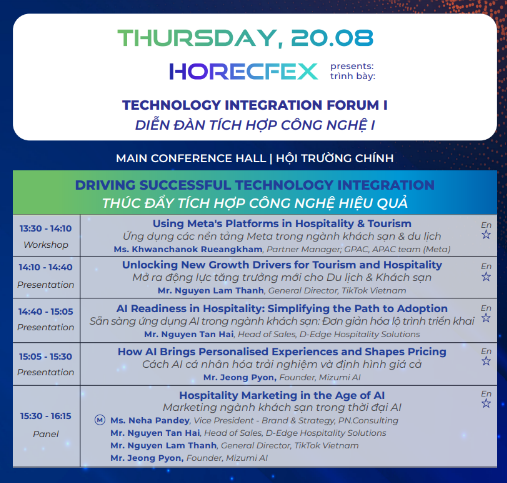
Subsequent content expands to how AI personalizes customer experience and impacts pricing, as well as the growing role of AI in hotel marketing activities. Thus, the story no longer stops at what AI can do, but moves closer to the problems businesses have to solve every day: where to apply it, how much to prepare, and how to make technology actually create business efficiency.
This is exactly the spirit that HORECFEX wants to set for the technology story: not chasing technology just because it’s new, but finding ways to put the right technology into the right problem, at the right time.
It lies in helping the industry invest more wisely.
That is also why the recognition of the Vietnam Hotel Association for HORECFEX carries meaning beyond a title of scale. In an industry where the pace of innovation is increasingly fast, an annual forum can serve as a point of reference: where new technology is placed alongside operational reality, market data, and business needs before a business decides to move forward.
HORECFEX VIETNAM 2026 takes place on August 20–21 at the Ariyana Convention Centre Danang. In the context of AI, robots, and a host of new technologies constantly creating promises for the future, the question worth bringing to the event is perhaps no longer “what’s new this year?”
But rather: among those new things, which one is truly worth the HORECA industry starting to invest in today?
HORECFEX VIETNAM 2026August 20–21, 2026 | Ariyana Convention Centre Danang As the largest annual forum on applied technology in the HORECA industry in Vietnam according to the certification of the Vietnam Hotel Association, HORECFEX VIETNAM connects Knowledge, Technology, Supply, and Connection in the same space, helping businesses go from seeing trends to evaluating which solutions are truly suitable to put into operation. |
WHEN TECHNOLOGY BECOMES PART OF THE DESTINATION EXPERIENCE
WHEN TECHNOLOGY BECOMES PART OF THE DESTINATION EXPERIENCE
Technology in the hospitality industry today is no longer just about optimizing processes, improving operational efficiency, or helping businesses understand customers better. When combined with creative content and local identity, technology can also become part of the tourism product itself, creating new experiences and opening up more ways to tell the story of a destination.
That spirit is clearly demonstrated at HORECFEX VIETNAM 2026, where technology does not only appear in discussion sessions about AI, hotel management, or digital transformation but is also brought directly into the attendee experience.
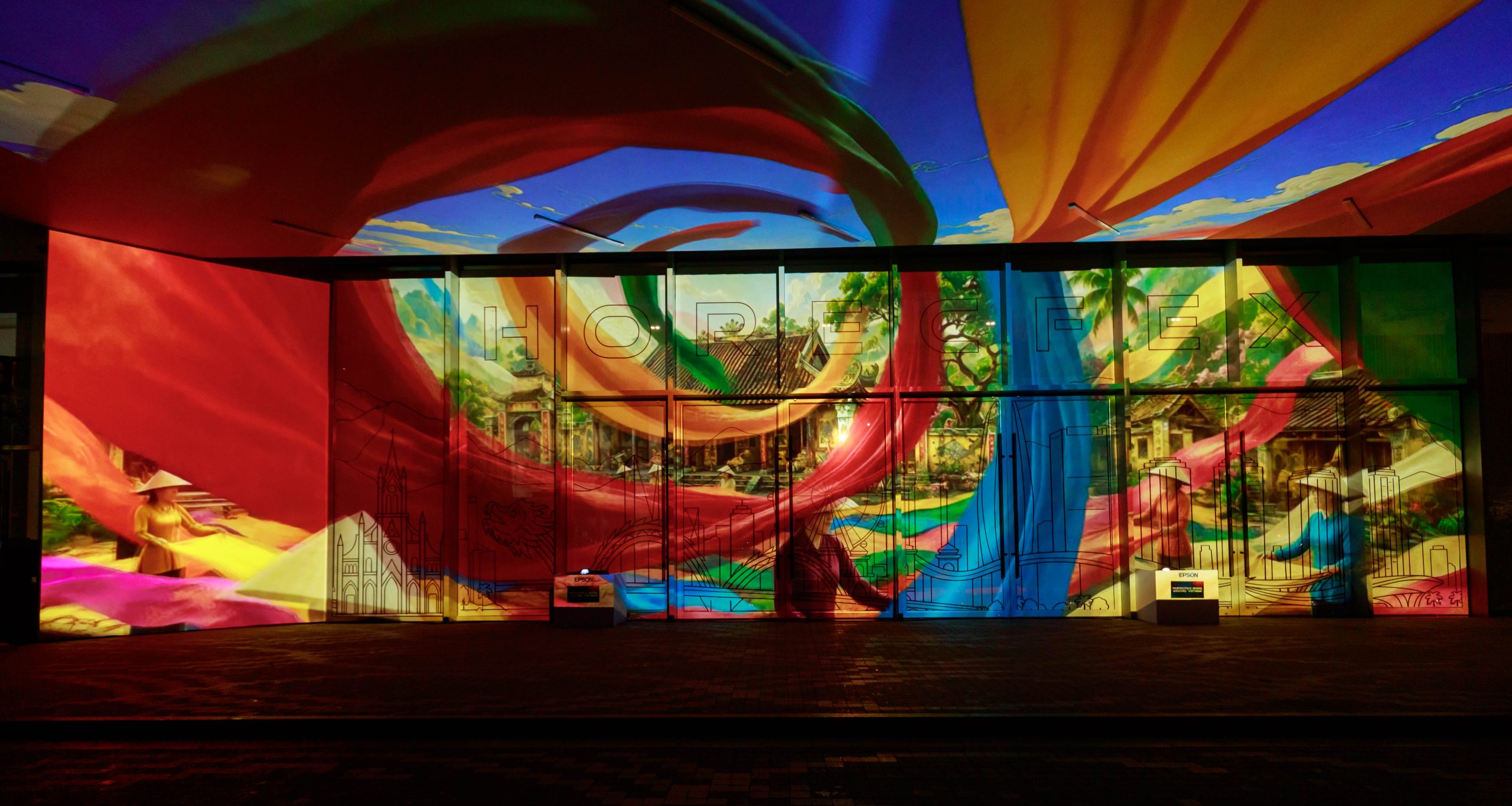
One of the notable highlights is the Projection Mapping program “Touching the Livable City”, performed at Furama Resort Da Nang within the framework of HORECFEX VIETNAM 2026.
Inspired by the familiar title “Da Nang – The Livable City”, the program does not simply recreate beautiful images of the city but tells a broader story about nature, culture-history, people, and the innovative spirit of Da Nang through the language of light, imagery, and sound.

The entire architectural facade at the performance area was transformed into a giant “screen.” With Projection Mapping techniques, each layer of imagery was aligned with the structure of the building itself, creating depth and movement effects, so that the architecture is no longer just a backdrop but becomes part of the artwork.
6 minutes of performance, 45 days of preparation
Behind approximately 6 minutes of performance is a preparation process lasting about 5 – 6 weeks, equivalent to 45 days.
From conceptualization, facade surveying, 3D modeling, storyboard building, mapping content design to projector system arrangement, nighttime testing, and calibration before official operation, every stage requires high precision so that the images can match every detail on the architectural surface.
The projection system uses high-brightness Epson laser projectors with a total equipment value of about 10 billion VND, with technical solutions implemented by LOGICO Trading Co., Ltd. – the authorized distributor of Epson projectors in Vietnam; the creative content and artistic design were executed by Giant Vision.

A representative from LOGICO shared: “Through ‘Touching the Livable City,’ we want to show that today’s projection technology is not just for conferences or information display. When combined with creative content and the identity of the destination, technology can become a storytelling medium, creating emotions and forming completely new experiences for tourists.”
According to the sponsor’s representative, the high-brightness Epson laser projector system was chosen to meet the requirements of a large-scale performance space, where brightness, color reproduction capability, stability, and mapping accuracy on architectural surfaces are factors that directly affect the quality of the experience.
But what is more noteworthy does not lie in the value of the equipment system.
Technology only truly has value for tourism when it helps tell the destination’s story better.
From an architectural facade to the story of a destination
From a facade at the HORECFEX 2026 event, the story of Da Nang can be retold using light, imagery, and sound.
In a similar way, a heritage site, a craft village, a museum, or a public space can also be approached using new forms. Technology can help history and culture be retold in a more visual, vivid, and emotional language for the new generation of travelers.

This is also a notable suggestion for the digital transformation process of Vietnamese Tourism in the coming period.
Digital transformation should not only be understood as digitizing management processes, putting data on platforms, or applying artificial intelligence to optimize operations. Technology can also become a part of the tourism product itself.
From Projection Mapping, digital museums, augmented reality experiences, multimedia performances to AI-personalized journeys, Vietnam can completely combine technology with culture and local resources to create more new products.
Especially with the night economy, experiences based on light, technology, and creative content can provide more reasons for tourists to continue exploring the destination after daytime sightseeing, thereby contributing to extending the length of stay and increasing spending.
From that perspective, “Touching the Livable City” is not just a technology performance. It is also an example showing how a destination can use technology to refresh the way it tells its own story while still keeping identity as the core value.
And that is also the spirit that HORECFEX VIETNAM 2026 wants to convey: The Hospitality of the future is not just where guests stay, but where technology, people, culture, and experiences meet.
From quantitative growth to competing through experience
Vietnamese tourism is facing a great development opportunity. We have the market, rich tourism resources, an increasingly expanding accommodation system, and an increasingly clear position on the regional tourism map. However, the next phase requires more than just building more hotels and welcoming more tourists.
The industry needs to create new products, new experiences, and new reasons for tourists to stay longer, spend more, and return. That spirit is exactly what HORECFEX VIETNAM 2026 wants to suggest through content on technology, innovation, and practical experiences implemented at Furama Resort Da Nang.

Technology, AI, green transformation, or new forms of experience like Projection Mapping are all tools. The ultimate important thing is how we use those tools to tell the Vietnamese story and what value we create for tourists. From spaces like Furama Resort Da Nang to forums like HORECFEX VIETNAM 2026, that story is being raised more and more clearly: technology only truly makes sense when it helps the destination create better experiences and a clearer identity.
Therefore, the next competition for Vietnamese Tourism is not just a competition for the number of visitors or the number of hotel rooms. It will increasingly be a competition for experience, creativity, and the value that each destination can create.
If this can be achieved, the goal of 45 – 50 million international visitors by 2030 will not just be a growth figure. More importantly, Vietnam can move towards becoming a destination with higher value, richer identity, smarter, and more sustainable development.

VIETNAM TOURISM FACING A NEW THRESHOLD: NOT JUST NEEDING MORE VISITORS, BUT NEEDING TO CREATE MORE VALUE
Da Nang, August 20, 2026 – Vietnam’s tourism is at a special turning point: visitor numbers are recovering strongly, infrastructure continues to be invested in, and visa policies are becoming increasingly open. However, the question for the new development phase is no longer simply “How many visitors will Vietnam welcome?”, but rather “How long will each tourist stay, how much will they spend, and what value will they receive from Vietnam as a destination?”.
That was also the major issue raised in the opening presentation of the Workshop Session by the Vietnam Hotel Association at HORECFEX Vietnam 2026, which took place on the morning of August 20 in Da Nang.
In the presentation on the development orientation of Vietnam Tourism for the 2026–2030 period, Dr. Do Cam Tho, Head of the Planning and Finance Department of the Vietnam National Authority of Tourism, posed a strategically significant question: Should Vietnam’s tourism in the coming years continue to choose growth in quantity or shift strongly towards increasing value?

According to the presented orientation, the 2026–2027 period is the pivotal time to transform the growth model from breadth, chasing visitor numbers, to depth, where value, greenness, intelligence, and cultural identity become the core metrics.
Rapid growth, but “quantity” and “value” are not yet aligned
Looking at the most recent figures, the immense resilience of Vietnam’s tourism is evident.
In 2024, Vietnam welcomed 17.6 million international arrivals and 115 million domestic arrivals, with total tourism revenue reaching approximately 780 trillion VND. In 2025, international arrivals increased to 21.2 million, domestic arrivals reached 137 million, and total revenue hit the 1 quadrillion VND mark.
The upward trend continues in 2026. In the first 7 months of the year, Vietnam welcomed nearly 13.92 million international arrivals, an increase of 13.8% over the same period; domestic visitors reached about 98 million, and total tourism revenue was approximately 675 trillion VND.
But behind those positive numbers lies a thought-provoking issue.
Average spending by international tourists is currently identified at around 1,200–1,400 USD per trip, and domestic tourists at about 2.4–2.6 million VND per trip. Meanwhile, about 70% of the international market share still comes from Northeast Asian markets including China, South Korea, Japan, and Taiwan; high-spending markets such as the Middle East, Northern Europe, North America, Australia, and emerging markets still represent a modest proportion.

In other words, the “quantity” is there, but the “value” has not increased commensurately.
This is perhaps also one of the issues that the hotel industry needs to pay special attention to. Because if the number of visitors increases but the length of stay is short, spending is low, and the destination experience is not rich enough, the pressure on infrastructure and resources will increase faster than the actual value that tourism brings.
Goal of 45–50 million international visitors by 2030
The development orientation sets very ambitious goals.
By 2030, Vietnam aims for 45–50 million international arrivals, 160 million domestic arrivals, and total tourism revenue of 80–90 billion USD, equivalent to about 3.1–3.2 quadrillion VND; accommodation infrastructure reaching about 1.5 million rooms and tourism creating about 5.8 million direct and indirect jobs.
The year 2026 specifically is considered a pivotal year.
The base scenario sets a target of 27 million international arrivals and 153 million domestic arrivals; while the low scenario is 23.2 million international visitors and 148 million domestic visitors. Achieving the goal of 25–27 million international arrivals this year is seen as an important prerequisite for moving towards higher growth scenarios in the 2027–2030 period.
However, it is noteworthy that the high scenario is not simply the scenario with the most visitors.
Among the three development scenarios to 2030, the high scenario is called “Value Breakthrough”, with international visitor growth of 15–18% per year and 45–50 million arrivals by 2030. Accompanying conditions include institutional improvement, development of the night economy, diversification of high-end visitor markets, and especially a breakthrough in spending and the value chain.
This is a notable change in the approach to tourism growth.
From “stimulating quantity” to “stimulating spending”
This transformation is quite evident in the market orientation.
For international visitors, Vietnam will both consolidate traditional Northeast Asian and ASEAN markets and expand depth in Europe, North America, Australia, and markets with high spending power and long stays.
Notably, India, the Gulf Cooperation Council (GCC) countries, the Russian Federation, and the Muslim visitor market are identified as new potential areas that require a systematic approach strategy.

For the domestic market, the mindset is also proposed to shift from “stimulating quantity” to “stimulating spending”.
Instead of just discounting to attract more visitors, products need to target higher-value needs such as 2–3 day weekend getaways, high-end MICE, family vacations, and the night economy.
This is an issue directly related to the hotel industry.
A hotel cannot just sell rooms. A destination cannot just sell plane tickets and scenic spots.
To increase spending, there must be more reasons for guests to stay and more things worth spending money on.
Hotels will have to transform from a “place to stay” into a part of the destination experience
The product orientation for the new phase also shows a broader picture.
Four main product lines including coastal and island tourism, culture-heritage, ecology, and urban tourism will continue to be upgraded. Alongside these are products capable of creating high added value such as wellness and medical tourism, MICE, golf, and shopping tourism.
Data
This places the hotel industry before a major change.
In the old model, hotels mainly provided bedrooms, restaurants, and some amenities.
In the new model, hotels and resorts must become part of an experience ecosystem: gastronomy, culture, wellness, conferences, entertainment, shopping, sports, local experiences, and the night economy.
This is also an opportunity for Vietnam’s Hospitality industry to move away from room rate competition.
When a hotel creates more experiences, revenue no longer depends solely on occupancy or ADR, but comes from the guest’s entire journey at the destination.
AI, data, and green transformation will change how tourism operates
Another noteworthy point in the 2026–2030 orientation is that digital transformation and green transformation are not seen as two separate programs, but as two parallel pillars.
The orientation sets out the formation of a national tourism data system connecting the Central government, localities, and businesses; the application of AI and big data in destination promotion and management; the development of multilingual virtual tourism assistants; digitization of procedures, electronic tickets, and cashless payments; while simultaneously applying IoT and AI in energy management and environmental monitoring at accommodation facilities and destinations.

For hotel businesses, this means that digital transformation in the coming years will not stop at PMS, booking engines, or chatbots.
Data will increasingly become an asset in revenue management, personalizing experiences, energy management, and understanding customer behavior.
Growth cannot be sustained by just building more rooms and welcoming more guests forever
Currently, Vietnam has more than 40,000 accommodation establishments with about 800,000 rooms, of which 3,510 establishments are rated from 1 to 5 stars.
If the goal for 2030 is about 1.5 million rooms, the question for the hotel industry cannot just be “how many more rooms do we need to build?”
More importantly, it must be:
Who will sleep in those rooms? How many nights will they stay? How much are they willing to pay? And besides the room rate, what other experiences will they spend money on?
That is precisely the intersection between the national tourism strategy and the hotel industry development strategy.
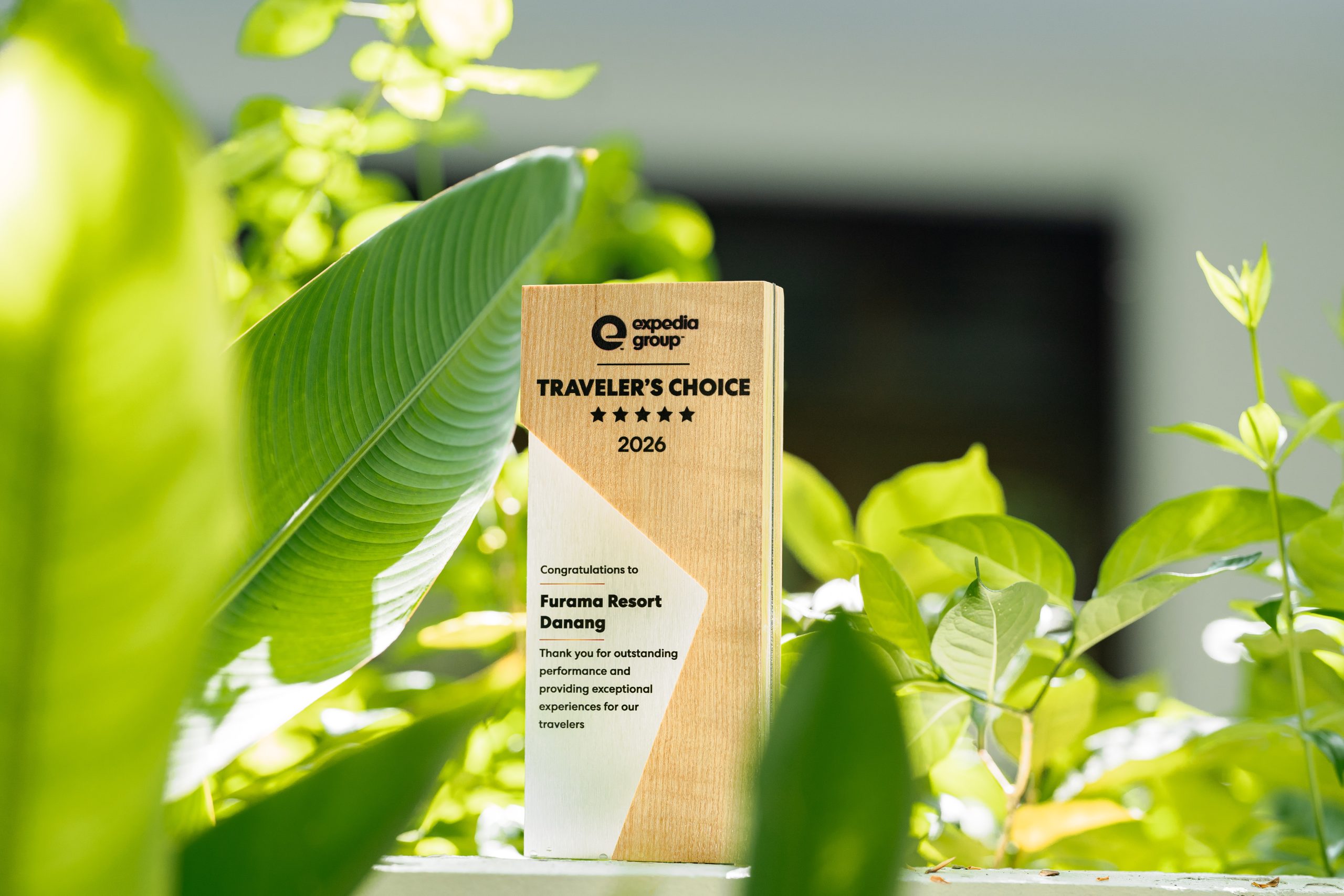
Traveler’s Choice 2026 – Recognition for the experiences carefully nurtured at Furama Resort Danang
Amidst the lush greenery of tropical gardens, sprawling water features, and the Da Nang coastline right before your eyes, Furama Resort Danang welcomes another cherished milestone: Traveler’s Choice 2026 from Expedia Group.
More than just a new title in the resort’s development journey, this recognition represents the efforts nurtured every day – through every meticulously cared-for space, every perfected service, and every experience that guests carry with them after their stay at Furama.

Recognition Built from Real Experiences
Every award marks a milestone. But for Furama Resort Danang, the significance of Traveler’s Choice 2026 lies more in the experiences that took place before the trophy was awarded – the moments guests truly see, feel, and remember during their stay.
It could be a morning waking up amidst the greenery of a tropical garden, walking through tree-lined paths toward the sea. It’s time spent by the multi-level ocean-facing pool, where coconut trees, the water’s surface, and the horizon meet the eye. Or a slow afternoon by the Lagoon Pool – a body of water nestled deep within layers of trees, offering a sense of privacy and tranquility right in the heart of the resort.
Furama possesses pool spaces with distinct landscapes, from multi-level freshwater pools facing the sea to the Lagoon Pool surrounded by tropical vegetation, alongside the beach stretching in front of the resort. It is the way nature is present in every space that creates various nuances for a holiday at Furama.

But a memorable vacation has never been created by scenery alone.
Behind the beauty of a resort are many daily tasks that guests might not see: a garden tended to early in the morning, a room prepared before the guest returns, a meticulously set dining table, a small request remembered, or a greeting that appears at just the right time.

When these seemingly small things are maintained consistently every day, they become a quality of service that guests don’t just see, but truly feel.
Furama – Where Landscape and Identity Create the Experience
What makes Furama so unique is not a single landscape or structure, but the way nature, architecture, and culture coexist as a whole.
Large trees embrace the pathways, open courtyards welcome natural light, and water features appear from the beachfront to deep between the two wings of rooms. In one corner, guests can hear the waves from the beach in front; just a few steps later, the space transforms into a quiet tropical garden with the Lagoon Pool shimmering under the canopy.
Furama’s architecture also creates its own layer of memory. Materials like wood, tiled roofs, and lines inspired by Vietnamese, Indochinese, and Champa heritage are present in many spaces, creating a look that is both familiar to Central Vietnam and possesses the elegant touch that has become the resort’s signature over the years.

Alongside landscape and architecture, cuisine is also an important part of the Furama experience. A meal doesn’t just end with the flavor of the dish; it is created from the ingredients, the preparation, the dining space, and the care in service. It is these layers of experience that make memories of Furama often not reside in a single image, but are pieced together from many different moments throughout the stay.
It could be a sunny morning by the pool, a patch of green seen from the balcony, a dinner that lasts longer than planned, or the familiar feeling of returning to a place where one once had a beautiful holiday.
Behind the Trophy is the Effort of an Entire Team
If the Traveler’s Choice 2026 trophy is what can be seen, then most of what makes that recognition possible lies in the work that rarely appears before the camera lens.
It is the coordination of many departments within the resort – from the front desk, housekeeping, food and beverage, engineering, and landscaping to the back-of-house operations teams. Each person takes on a different role, but all contribute to the guest’s overall experience.
A beautiful garden needs daily care. A pristine room is the result of constantly maintained standards. A delicious meal doesn’t just start in the kitchen but from the selection of ingredients, preparation, service, and listening to feedback. A guest feeling cared for sometimes starts simply with a staff member remembering a habit or a small request.
It is thousands of such details, when performed with dedication and consistency, that create the quality guests feel throughout their stay.
Traveler’s Choice 2026 is therefore not just recognition for Furama Resort Danang as a destination, but also for the people who quietly make Furama what it is every day.

The Value of a Choice Built Over Time
For Furama Resort Danang, the meaning of an award lies not just in the title bestowed, but in the trust that brought guests here and makes them continue to choose Furama for future holidays.
Every positive review, every time a guest recommends Furama to loved ones, or simply the moment a returning guest walks through the lobby again is very real recognition. Because for someone to choose to return, the beauty of the landscape alone is not enough. What remains after the trip must be the feeling of a place that made them truly comfortable, where they were sincerely welcomed and had memorable times with those they love.

That is also why memories of Furama sometimes start from very simple things: the sound of the sea in the early morning, the shadows of trees stretching across the path, a patch of blue water under the canopy, or the kindness in a brief encounter. These things are not on the trophy, but they are what create the reason for Furama to be remembered after the trip has ended.
A guest’s choice is therefore not just the result of a successful holiday. It is also the most sustainable measure of the values that Furama has persistently preserved over time.
A New Milestone on a Continuing Journey
Traveler’s Choice 2026 is a cherished milestone, but for Furama Resort Danang, the meaning of the award does not stop at the moment of recognition.
An award can mark the achievement of a journey, but it also sets the responsibility for the road ahead – the responsibility to continue maintaining the quality that built trust, to continue perfecting every experience, and to continue preserving the unique traits that made Furama stand out in the coastal city of Da Nang.
Tomorrow, the gardens will still be tended, the rooms will still be prepared, the kitchens will light up again, and new guests will continue to walk through Furama’s doors to begin their own holidays. It is this continuity that makes an award meaningful: today’s achievements become the motivation for tomorrow’s experiences to be even better cared for.
Furama Resort Danang sincerely thanks you for every choice, every shared word, and every return that contributed to Traveler’s Choice 2026.
And more than a title, what Furama treasures most is when a holiday concludes with memories beautiful enough to be kept – and one day, become the reason for guests to want to return.

24 Hours at Furama Resort & Villas Danang – When a Day Off Offers More Than One Way to Enjoy Yourself
From above, Furama Resort & Villas Da Nang appears as a green strip stretching to the coast. Low tiled roofs are hidden under the canopy of trees, blue pools are interspersed throughout the garden, and the front opens directly onto the sand and the ocean.
But it is only by walking through the resort that one realizes Furama offers more than just a single landscape.
From the wide expanse of the sea in front, the path gradually leads into the shaded Lagoon Garden; from there, you encounter a house carrying a story from Muong Khu, then continue to the villa area, the Central Pool, and spaces bearing the mark of Vietnamese architecture. In just a few steps, the scenery changes.
Therefore, 24 hours at Furama is interesting not because of trying to experience as much as possible. What is more noteworthy is that a day can continuously change its mood without almost ever needing to step outside the resort.

06:30 – Furama in the early hours of the day
There is a very different Furama before the sun rises high.
The beach is still sparse with footprints, coconut trees cast long shadows on the paths, and the surface of the Lagoon pool is almost without a ripple. This is also a rare time of day when the vast resort seems to hold only the sound of waves from the sea and the green of the garden just waking up.
From the rooms at the Resort, the morning opens up through balconies facing the garden, the pool, or the ocean. Just a short walk can take one from the tree-lined paths down to the sand, when the early light is still soft and the Da Nang sea has not yet taken on the brilliance of noon.
On the Villas side, dawn is somewhat more private. Behind the layer of greenery surrounding each villa is a private courtyard and pool—where the new day can begin with a few laps, a cup of coffee on the porch, or simply those first minutes without needing to leave the villa.
Two spaces, two different shades of morning: one opening gradually toward the sea, the other tucked away in a private garden. And as Furama begins to get busier, the smell of coffee and breakfast also brings everyone to the dining tables at Café Indochine or Danaksara.

09:00 – When the water leads the way
Leaving the dining table, Furama seems to open up through water.
By the sea is a multi-level pool facing the ocean. Deep between the two wings of the Resort rooms is the Lagoon Pool surrounded by tropical vegetation. Moving to the Villas area, the Central Pool stretches between tiled roofs and rows of trees. Three public pools, three different ways of organizing the landscape—alongside the private pool system of the villas.
The Lagoon Pool is perhaps the place that creates the clearest transition.
From a seaside resort, one suddenly steps into a body of water nestled deep under layers of trees. Sunlight filters through the leaves, the blue of the pool mixes with the surrounding greenery, making the sea, though not far away, suddenly feel like it belongs to another world.
While part of the family chooses the pool, more active members can head to the beach. SUP and kayaking are two of the water activities organized by Furama for guests; the tennis court is located in the garden connecting the Resort with the International Convention Palace.
At Furama, the sea is not a backdrop to be viewed from afar. It becomes a part of the daily schedule.

10:00 – When children have another world to explore
A family resort doesn’t just need many shared activities. More importantly, each generation must have a private space attractive enough.
Little Nemo Kids’ Club is exactly that world for young guests. The indoor space is designed with play areas, reading corners, and many activities such as statue painting, puzzles, watching cartoons, or a ball pit; programs for children also extend to creative activities and water skills.
And when the children have their own schedule, the adults’ vacation also changes.
A tennis match no longer has to wait until the whole family wants to exercise. A spa session doesn’t need to become a joint plan. A chair by the pool is enough to become a “meeting point” after a few hours of everyone following their own interests.
A family vacation is therefore not just created by photos of everyone standing together.
Sometimes, it is the periods of separation that make the reunion more interesting.

11:30 – A house that traveled from Muong to the coastal city
From the Lagoon Pool, following the garden path a bit further, the landscape changes again.
Amidst the greenery is Tàya House.
According to the story preserved by Furama, the house traveled from Muong Khu—”the land of stones”—to Da Nang, the city of the sea. Today, Tàya House sits under the canopy of the Lagoon Garden, becoming a space where cuisine, culture, and meetings take place under the same roof.
This is also one of the corners that clearly shows Furama does not just build resort experiences around pools and beaches.
In the Vietnamese cooking class at Tàya House, guests do not just stand and watch. Under the guidance of the chef, ingredients are laid out, and dishes gradually take shape on the participants’ own kitchen tables before becoming a meal enjoyed together. Cooking classes are currently organized by Furama at Tàya House daily according to the program schedule.
For children, it is an experience intuitive enough to learn more about Vietnamese dishes. For adults, sometimes more interesting than the recipe is the story behind the food and the house surrounding them.
The morning began with the sea and water. By late morning, Furama has led people to a completely different slice of Vietnam.

14:30 – When Villas become a world of their own
The afternoon is when the value of a villa becomes more apparent.
Not just extra space, the structure of Furama Villas allows the same afternoon to unfold in many ways: bedrooms for those who want to rest, sofas and living rooms for conversations, a pool right outside the door, a kitchen and dining area that keep everyone in the same space without forcing everyone to follow the same schedule.
Stepping out of the villa, the Central Pool becomes the visual center of this area.
The water stretching between rows of coconut trees and low tiled roofs gives the Villas area a different mood compared to the seaside Resort part—less movement, more privacy, but still close enough that in just a few minutes one can find a café, spa, or return to the beach.
This is also when Furama Villas is no longer simply understood as the “villa part of the resort.”
It has its own life.

15:30 – Two cups of coffee, two perspectives on the afternoon
If the morning is guided by the water, the afternoon at the Villas is interesting because of the pauses.
L’Amuse Gourmet Café is located right by the Central Pool. That position makes the shop feel like an extension of the pool: stop by after swimming, order a drink or a light snack, and then continue the afternoon almost without feeling like you’ve left the resort.
Just by changing the space, V-Senses Café takes people to another world.
Positioned by Furama as a “Vietnamese Heritage House,” V-Senses Café recreates the style of a Northern three-compartment house with a red tiled roof, wide porch, wooden structure, and carved details. The menu continues that story with traditional noodles, filter coffee, egg coffee, and many familiar flavors of Vietnamese life.
If L’Amuse carries the atmosphere of a summer afternoon by the pool, V-Senses Café makes one want to look closely at the wooden pillars, tiled roofs, and the food in front of them.
Two stops in the same Villas area, but they almost never repeat each other.

16:30 – An hour for the body
After the sea, the pools, the walks through the garden, and an afternoon of many scene changes, V-Senses Wellness & Spa is where the pace of the day suddenly slows down.
The spa space is set amidst greenery and architectural elements reminiscent of Vietnamese traditions, with treatments inspired by Asian body care methods, essential oils, and therapeutic massage.
Here, the scenery no longer needs to be vast.
In place of the horizon is soft light. In place of the sound of the sea is the sound of water and the quiet within the treatment room.
An hour at the spa thus creates a necessary break before the entire resort changes once more—as the sun begins to set toward the end of the day.

17:30 – Finally, the day returns to the sea
There is something interesting in the way Furama organizes its space: even after going deep into the garden, at the end of the day, one is easily drawn back to the sea.
The Ocean Terrace is located right on the sand, with an open space for drinks, light snacks, and late afternoon hours. From 17:00 to 18:00 is also the Happy Hour currently applied here.
After the deep green of the Lagoon, the wooden elements of Tàya House, the surface of the Central Pool, and the Vietnamese architecture at V-Senses Café, the sky in front of Ocean Terrace suddenly feels much wider.
The sea breeze is clearer.
The light lowers through the rows of coconut trees.
A cocktail appears on the table just as the color of the sky begins to change.
Furama has taken people through many spaces during the day, but by late afternoon, the ocean remains the most irreplaceable viewpoint.

19:00 – After sunset is a different culinary map
If you only have one evening, the choice is somewhat harder.
Café Indochine brings Asian-European flavors into an Indochinese space; Don Cipriani’s maintains the Italian trattoria spirit with options for indoor or poolside dining; Danaksara in the Villas area follows Central Vietnamese dishes; Steak House The Fan places the steak experience in a space facing the sea.
The point of note is not the number of restaurants, but that each place is associated with a different context.
One evening can end with an Italian dish by the pool. Another evening is a meal with Central Vietnamese flavors at the Villas. Another occasion is for steak and the sea.
Even after the sun has set, Furama’s journey of “changing scenes” has not truly stopped.

21:30 – When the places you’ve passed through become a different Furama
Night makes the resort contract.
The garden paths are replaced by low lights. The Lagoon no longer has patches of sunlight through the canopy. The Central Pool reflects the rows of trees and the windows of the Villas. Hai Van Lounge still keeps the music for guests who don’t want the day to end; the lounge currently serves until midnight with cocktails, snacks, and an evening music program.
Returning to the Resort is a quiet room behind the garden.
Returning to the Villas is the living room, the courtyard, and the private pool that have begun to feel familiar after entering a few times.
And only then is it easy to realize that 24 hours at Furama is not remembered by one specific activity.
It is the way the landscape continuously changes within the same day: from the wide expanse of the sea to the Lagoon Garden, from the pool to a house carrying a story from Muong Khu, from the world of children to a private villa, from Northern architecture to cocktails by the ocean.
Still at the same address, but every time you step into a different space, Furama tells a different story.
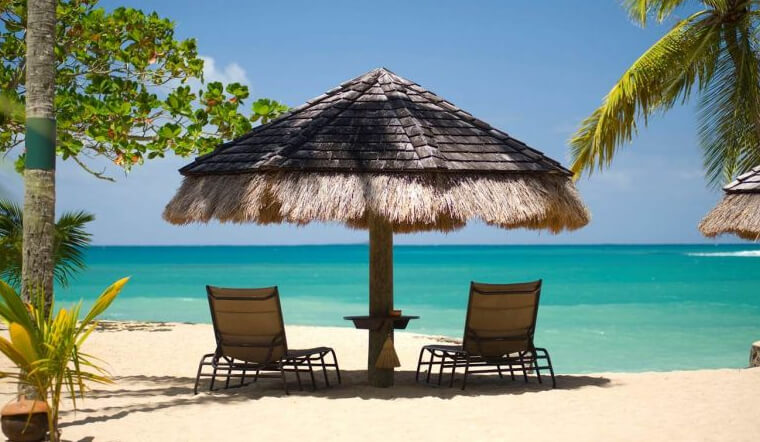
Why does nature help people rest better?
In the midst of a life constantly filled with screens, notification bells, work, and non-stop streams of information, resting is sometimes no longer as simple as stopping. A person can lie still, yet the mind continues to process unfinished conversations, tomorrow’s plans, or unresolved issues.
This is also why trips near the sea, gardens, or bodies of water often bring a distinct sense of relaxation. Nature does not eliminate all anxieties immediately, but it can create favorable conditions for the body to lower its guard, for attention to be restored, and for the mind to gradually return to a slower rhythm.

The brain doesn’t truly rest just because the body stops
In daily life, humans constantly use directed attention. We need to pay attention when reading documents, replying to emails, driving, participating in meetings, or switching between various tasks. Maintaining this state for long periods can lead to mental fatigue, difficulty concentrating, and irritability.
According to Attention Restoration Theory, natural environments can support the recovery process because they engage people in a gentle way that does not require intense focus. The movement of tree canopies, light reflecting on the water, or the rhythm of waves are all attractive enough to hold attention without forcing the brain to constantly analyze and react. Empirical studies and scientific reviews have noted a link between exposure to nature, the ability to restore attention, and reduced mental fatigue, though the level of impact may vary depending on the individual and the type of environment.
Simply put, nature allows the mind to observe without having to process too much. This is a state difficult to find in spaces with too many competing signals such as artificial light, traffic, phone notifications, and overlapping conversations.
Greenery creates a necessary transition space
Greenery doesn’t just make the landscape more beautiful. A garden with multiple layers of vegetation also creates a sense of relative separation from the pace of life outside. When walking under tree canopies, people tend to walk slower, observe more, and reduce the need to move toward a specific goal.
Research reviews show that exposure to green spaces is linked to the ability to reduce stress, improve mood, and support mental health. The World Health Organization also views green spaces as a factor that can promote psychological relaxation, physical activity, and social interaction, while contributing to reducing the impact of noise and high temperatures. However, the benefits depend not only on the quantity of greenery but also on the quality of the landscape, accessibility, and how people actually use that space.
This is why a garden with paths, shade, seating, and open views often feels more pleasant than a patch of green only observed from a distance. Nature’s value is most evident when people can actually enter, touch, and spend time within it.

Water helps expand both vision and emotions
Beside green spaces, areas with the presence of water are often called blue spaces. These can be the sea, lakes, rivers, lagoons, or water features designed into the landscape.
Many studies have noted a positive link between exposure to blue spaces and mental health, feelings of happiness, as well as physical activity. While researchers continue to determine which types of water bodies and levels of exposure provide the clearest benefits, landscapes with water are generally considered an important part of a restorative environment.
A vast body of water also changes how people perceive space. When looking toward the horizon at sea, the eyes are no longer limited by walls, ceilings, or objects at close range. That sense of openness can create a psychological distance, helping the problems currently occupying one’s thoughts to temporarily seem smaller.
It is not about forgetting reality. It is an opportunity for people to look back at reality from a calmer distance.
Natural sounds help soothe the sensory environment
Nature is not only perceived through sight. The sound of waves, flowing water, wind through the leaves, or birdsong all contribute to a unique soundscape.
Studies on restorative environments show that natural sounds are often rated as more pleasant and restorative than urban noise. In some experiments, the sounds of nature also support recovery from stress and improve certain attention-related tasks. However, the effectiveness depends on volume, context, and personal perception, as not all natural sounds are pleasant to everyone.

The noteworthy point lies in the regularity but not complete repetition. Sea waves have a rhythm, yet each wave is never exactly like the one before. Leaves move constantly but do not create signals that demand a reaction. This gentle variation helps the senses maintain a moderate state of alertness without falling into overload.
Rest comes from a combination of multiple senses
The power of nature rarely lies in a single element. A tropical garden is not just green; it also has shade, the scent of plants, the sound of moving leaves, and the changing light. The sea is not just a patch of blue before the eyes; it also has wind, the saltiness in the air, the sound of waves, and the sensation of sand underfoot.
When multiple senses simultaneously receive relatively pleasant natural signals, people can shift their attention away from internal thought streams to return to the current experience. Observing one’s breath, feeling the air temperature, or listening to surrounding sounds are also principles that often appear in mindfulness practice.
Therefore, nature is not just a backdrop for a vacation. It is a direct part of the resting experience.

When nature becomes a part of the Furama space
At Furama Resort Danang, the natural landscape is not separate from the accommodation areas but is interwoven throughout the guest’s entire journey.
The tropical garden, Lagoon pool, airy porches, open corridors, and the beach create a continuous transition between indoor and outdoor spaces. Greenery does not end at the guest room door, and water does not only appear in a separate area.
A morning can begin with a few minutes of walking under the trees before heading to the sea. At noon, guests return to the shade of the garden or stop by the water. As evening falls, the open space leads the gaze to the horizon, where light, sea breeze, and the sound of waves together create a slow transition rhythm before the night.
These experiences do not necessarily have to be arranged into a schedule. Their value lies in the fact that guests can come into contact with nature in very ordinary moments: on the way back to the room, from the balcony, during an outdoor meal, or when stopping by the lake.
However, at Furama, nature does more than just lead people to relaxation. It also becomes the foundation for opening a deeper journey of discovery into Vietnamese culture, architecture, and cuisine.
From resting to cultural discovery
A memorable vacation is not necessarily created only by the body resting. For many travelers, especially those coming to Vietnam from afar, the trip is also an opportunity to better understand the land, history, and people at the destination.
Nature can act as a buffer that helps the process of discovery happen more slowly. When no longer swept up in a dense schedule, guests have more time to observe architectural details, savor a dish longer, or listen to the story behind a space.
At Furama Resort Danang, the garden, water, wooden corridors, and deep-toned tiled roofs create a connection between the landscape and architecture. In that space, cultural imprints do not appear as separate exhibits but are interwoven into the resort experience.
Details reminiscent of Champa culture open up stories of a civilization that once flourished in Central Vietnam. These could be architectural lines, patterns, artworks, or spaces that help guests better visualize the historical depth of the land.

The presence of these elements creates another layer of meaning for the landscape. The resort is not just seen as a place with greenery and water, but also as a space bearing the marks of many cultural flows that once met in Central Vietnam.
From the Champa imprint, the journey continues to expand to spaces reminiscent of traditional Vietnamese architecture and life.
At V-Senses Café Heritage, the image of a Vietnamese house with tiled roofs, wooden structures, and open porches creates a space for guests to feel the culture through architecture, light, and the rhythm of life. A cup of coffee, a dish, or time spent looking out at the garden thus becomes more than just a culinary experience; it becomes a gentle approach to Vietnamese memory and life.

Spaces inspired by highland architecture also open up another slice of cultural diversity. Amidst the green garden, wooden materials, traditional roofs, and dishes with local imprints help guests realize that Vietnamese culture is not a single image.
Each land has its own architecture, ingredients, customs, and storytelling. When these elements are placed in a resort space close to nature, cultural discovery no longer feels like a history lesson. It happens naturally through observing, enjoying, and spending time.

Bringing Bridal Sedans Back to Modern Weddings: Innovating to Go Far, Anchored in Tradition
There are images that seem to exist only in the memories of Vietnamese weddings from the past: the flower sedan chair, ceremonial parasols, the ao dai, the vibrant red color, and the solemn procession escorting the bride to her husband’s home.
But perhaps those values are finding an opportunity to return, in a new way.
The interesting thing is that today’s young Vietnamese generation grew up with technology, AI, social media, and global trends. They organize weddings that are increasingly modern, personalized, and reflect a very distinct aesthetic taste. Yet, the more they integrate, a segment of young people increasingly wants to return to their roots.
And weddings are becoming a beautiful space for that return.
The flower sedan chair is not just for creating a beautiful photo
In a traditional wedding, the bridal procession is not merely about moving the bride from one place to another.
It is a ritual marking a pivotal moment in life, when two families officially connect and the woman embarks on a new journey.
Therefore, the flower sedan chair, ceremonial parasols, the color red, the ao dai, and the procession all hold their own significance.
Notably, more than a decade ago, this imagery was recreated at Furama Resort Da Nang.

The flower sedan chair passes through tiled corridors, courtyards, and spaces bearing the hallmarks of Asian architecture. The bride in her traditional gown, the procession with ceremonial parasols and the color red, create a wedding that is both solemn and quintessentially Vietnamese.
Looking back at those images today, I see that their value lies not just in a beautiful wedding.
It raises a more interesting question:
In an increasingly modern society, why don’t we bring traditional values back using the language of today’s generation?
Young people are not turning their backs on tradition
Perhaps we once thought that the younger generation would prefer weddings entirely in the Western style: white wedding dresses, ballrooms, imported flowers, music, and international rituals.
But the reality is more interesting.
Many young brides and grooms want to wear the ao dai during the ancestor ceremony. They seek out traditional patterns, handcrafted materials, lotus flowers, ceramics, silk, bamboo, dishes associated with their hometown, and even the wedding rituals that once existed in their families.
This does not mean young people want to return to a wedding from decades or centuries ago.

They are choosing the most beautiful aspects of tradition to tell their story in a modern way.
This is a very important distinction.
For tradition to survive, it doesn’t necessarily have to keep every form intact. A flower sedan chair can certainly appear in a modern destination wedding. The ao dai can be designed using contemporary fashion language. The bridal procession can be shortened while still maintaining its solemnity.
What needs to be preserved is not every detail of the past.
What needs to be preserved is its spirit.
It is family. It is the witness of parents, grandparents, and loved ones. It is the respect for the moment two people start a new family. And deeper still, it is the feeling of knowing where you come from.

This could also be a new direction for the Vietnamese wedding industry
Vietnam is strongly developing destination weddings. We have beaches, resorts, heritage, cuisine, and beautiful wedding venues.
But if there are only beautiful ballrooms, beautiful beaches, and beautiful flowers, we will have to compete with Bali, Phuket, Koh Samui, or many other destinations.
Culture is the thing that is hard for others to copy.
A wedding in Vietnam can completely begin with traditional rituals, the ao dai, and a flower sedan chair; followed by a beach wedding in a contemporary style; then an evening banquet, music, and experiences for family and friends.
Especially for Vietnamese couples living abroad, or multi-national families, a wedding is a wonderful opportunity to introduce Vietnamese culture to international friends.
At that point, heritage no longer stays in the museum. Heritage enters life.
From a wedding ceremony to a “wedding holiday”

I think the Hospitality industry also needs to look at weddings more broadly.
A destination wedding should not just be measured by the number of guests or the revenue of a gala night.
Guests can arrive two or three days before the wedding and stay afterward. Both families have time to meet. Friends experience the destination together. The bride and groom can organize a welcome dinner, tea ceremony, rehearsal dinner, the wedding ceremony, an after-party, and post-wedding activities.
A wedding then becomes a wedding holiday.
This is also a direction that Furama Da Nang is well-equipped to develop because the resort space itself carries many hallmarks of Asian architecture and culture.
The flower sedan chair and the procession can be part of the heritage story. But before and after the wedding, there can also be Vietnamese cooking classes for both families, culinary experiences, wellness and spa for the bride and groom, yoga, beach sports, beachside parties, or journeys to explore Hoi An, My Son, the Marble Mountains, and Central Vietnamese culture.

Thus, we are not just organizing a wedding ceremony lasting a few hours, but can create a journey lasting several days.
And each day tells another story about Vietnam.
That is also the greatest value of bringing heritage into Hospitality: not displaying the past, but making the past continue to live in today’s experiences.
Perhaps the reappearance of the flower sedan chair in a modern resort carries such a meaning.
Young Vietnamese people are still moving very fast toward the future.
They love technology, like what’s new, and are ready to embrace global trends.
But moving forward does not mean having to leave one’s values behind.
Sometimes, on a very new day of one’s life, people want to find their way back to very old things: an ao dai, the color red, a family ritual, a flower sedan chair.
Because a beautiful wedding can be remembered for a few years. But a wedding with a story, with culture, and with roots can become a memory told through many generations.
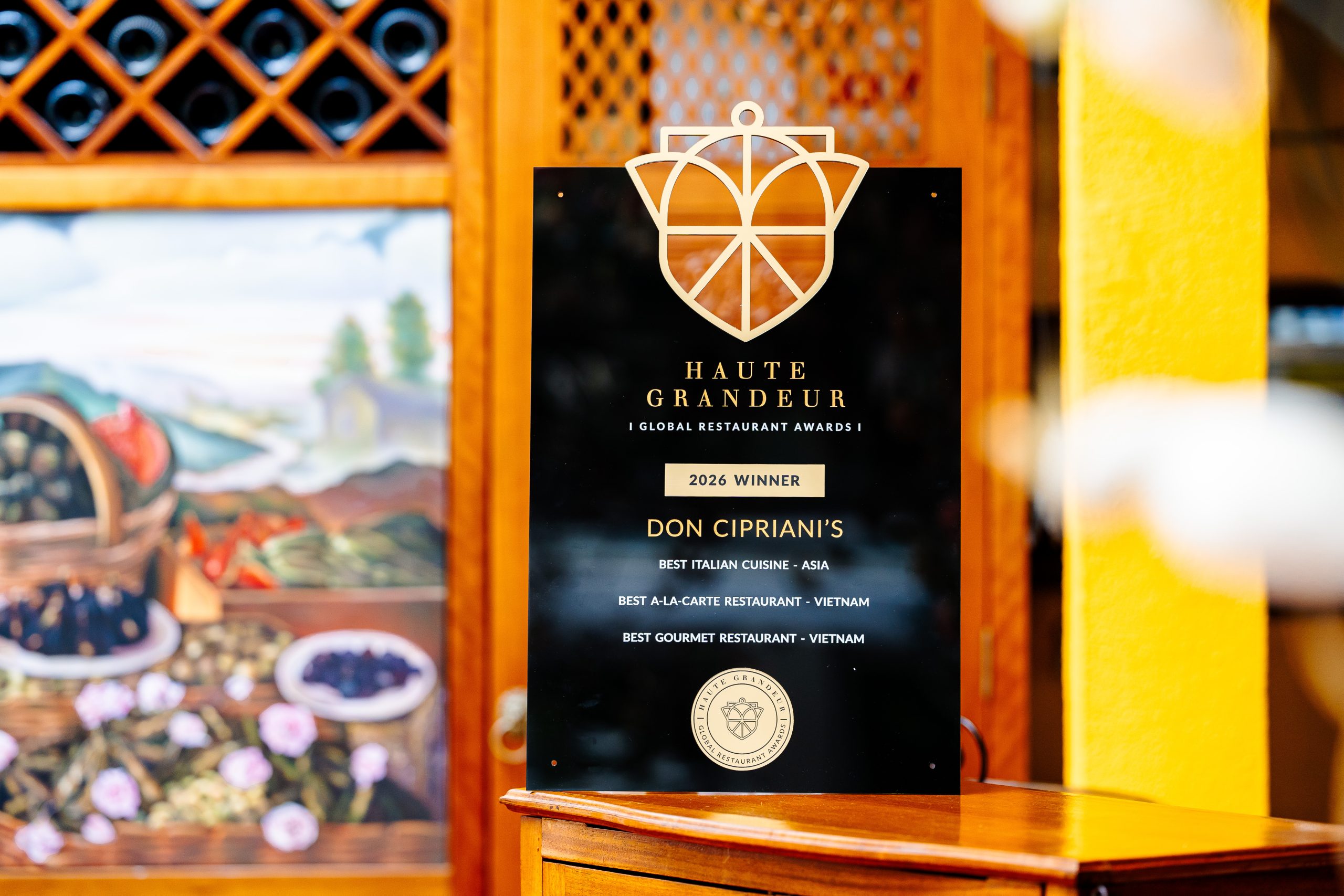
DON CIPRIANI’S – A CELEBRATION OF ITALIAN CUISINE AT THE HAUTE GRANDEUR GLOBAL RESTAURANT AWARDS 2026
Bringing the spirit of Italian cuisine to the shores of Da Nang, Don Cipriani’s has created its own mark through flavors, ambiance, and wonderful dining experiences. That journey continues to be recognized at the Haute Grandeur Global Restaurant Awards 2026, with prominent titles in both Vietnam and Asia.
Don Cipriani’s Honored at the Haute Grandeur Global Restaurant Awards 2026
2026 marks another memorable milestone for Don Cipriani’s – the Italian restaurant at Furama Resort Da Nang – as it was honored at the Haute Grandeur Global Restaurant Awards 2026. The restaurant made its mark with three titles: Best Italian Cuisine in Asia, Best A-La-Carte Restaurant in Vietnam, and Best Gourmet Restaurant in Vietnam.

Best Italian Cuisine in Asia – A Mark of Italian Gastronomy in Asia
The title of Best Italian Cuisine in Asia at the Haute Grandeur Global Restaurant Awards 2026 has become a prominent milestone in Don Cipriani’s journey. From Furama Resort Da Nang, the restaurant was honored across Asia in the Italian cuisine category, further cementing its name in a memorable year of new achievements.
This recognition is also tied to the Italian spirit that Don Cipriani’s pursues in its culinary experience. Every small detail in each dish at Don Cipriani’s contributes to recreating the distinctive features of Italian cuisine right in the heart of Da Nang.
Beyond just the food, Don Cipriani’s was portrayed by Haute Grandeur as a place that emphasizes sharing and connection around the dining table – values inherently linked to Italian culinary culture. Best Italian Cuisine in Asia 2026 thus becomes a proud hallmark, continuing to recognize the journey of bringing Italian flavors and spirit to diners at Furama Resort Da Nang.
Two Titles for Don Cipriani’s in Vietnam
Alongside the Best Italian Cuisine in Asia title, Don Cipriani’s was also honored by the Haute Grandeur Global Restaurant Awards 2026 with two awards in Vietnam: Best A-La-Carte Restaurant in Vietnam and Best Gourmet Restaurant in Vietnam. These two titles add notable milestones for Don Cipriani’s in 2026, while expanding the restaurant’s recognition from the Italian cuisine category at the Asian level to restaurant categories within Vietnam.
Behind these titles is a culinary experience portrayed by Haute Grandeur through the distinctive features of Don Cipriani’s kitchen. Diners can encounter fragrant wood-fired pizzas, pasta prepared right in the open kitchen, and watch the chefs directly prepare the dishes. From the flavors to the way the food is created before the guests’ eyes, everything contributes to perfecting the Italian culinary experience that Don Cipriani’s offers at Furama Resort Da Nang.

What Makes the Mark at Don Cipriani’s?
A Space Inspired by Mediterranean Summers
Located by the pool at Furama Resort Da Nang, Don Cipriani’s offers a space deeply inspired by Italy, where tropical greenery blends with a relaxed atmosphere reminiscent of summers on the Mediterranean coast. Amidst this setting, every meal is not just a journey of flavor discovery but also a time for diners to leisurely enjoy the space and the characteristic slow rhythm of a summer vacation.
The olive and lemon trees at Don Cipriani’s evoke long summer days on the island of Capri. From the landscape to the atmosphere, Italian inspiration is skillfully woven into the restaurant experience, creating a poetic backdrop for gatherings and moments around the dining table.

The Flavor of Italy Present in Every Experience
At Don Cipriani’s, the spirit of Italian cuisine is expressed through signature flavors and vivid experiences right at the open kitchen. The aroma of wood-fired pizza, pasta prepared live, and the movement of the kitchen make the tasting journey begin even before the dish is placed on the table.
Hidden behind those dishes are techniques of dough kneading and sauce stirring preserved through generations, carrying stories of Italian culinary traditions. The continuity between ancient techniques and the way the food is presented before the diner contributes to the uniqueness of Don Cipriani’s – where every meal is not just about flavor, but also reveals a part of Italian culture and spirit.

Don Cipriani’s – Where the Italian Spirit is Present in Every Moment
More than just a place to enjoy food, Don Cipriani’s is also a place where moments are shared around the dining table. It could be a family gathering over plates of pasta, a couple chatting over a glass of wine, or simply a time for everyone to sit together and enjoy a meal.
As Haute Grandeur describes, dining at Don Cipriani’s is a journey of “slowing down, savoring the moment, and discovering the spirit of Italy.” The blend of cuisine, space, and the spirit of sharing is exactly what makes the experience at Don Cipriani’s, Furama Resort Da Nang, so unique.
Discover the Italian Culinary Experience at Don Cipriani’s
From signature flavors and Mediterranean-inspired spaces to shared moments around the table, Don Cipriani’s offers a journey to discover the spirit of Italy right at Furama Resort Da Nang. Take the time to enjoy your favorite dishes and savor the relaxed rhythm of an authentic Italian dinner at Don Cipriani’s.
Address: Furama Resort Da Nang | 105 Vo Nguyen Giap, Ngu Hanh Son District, Da Nang
Service hours: 11:30 – 14:00 & 18:00 – 22:00 daily
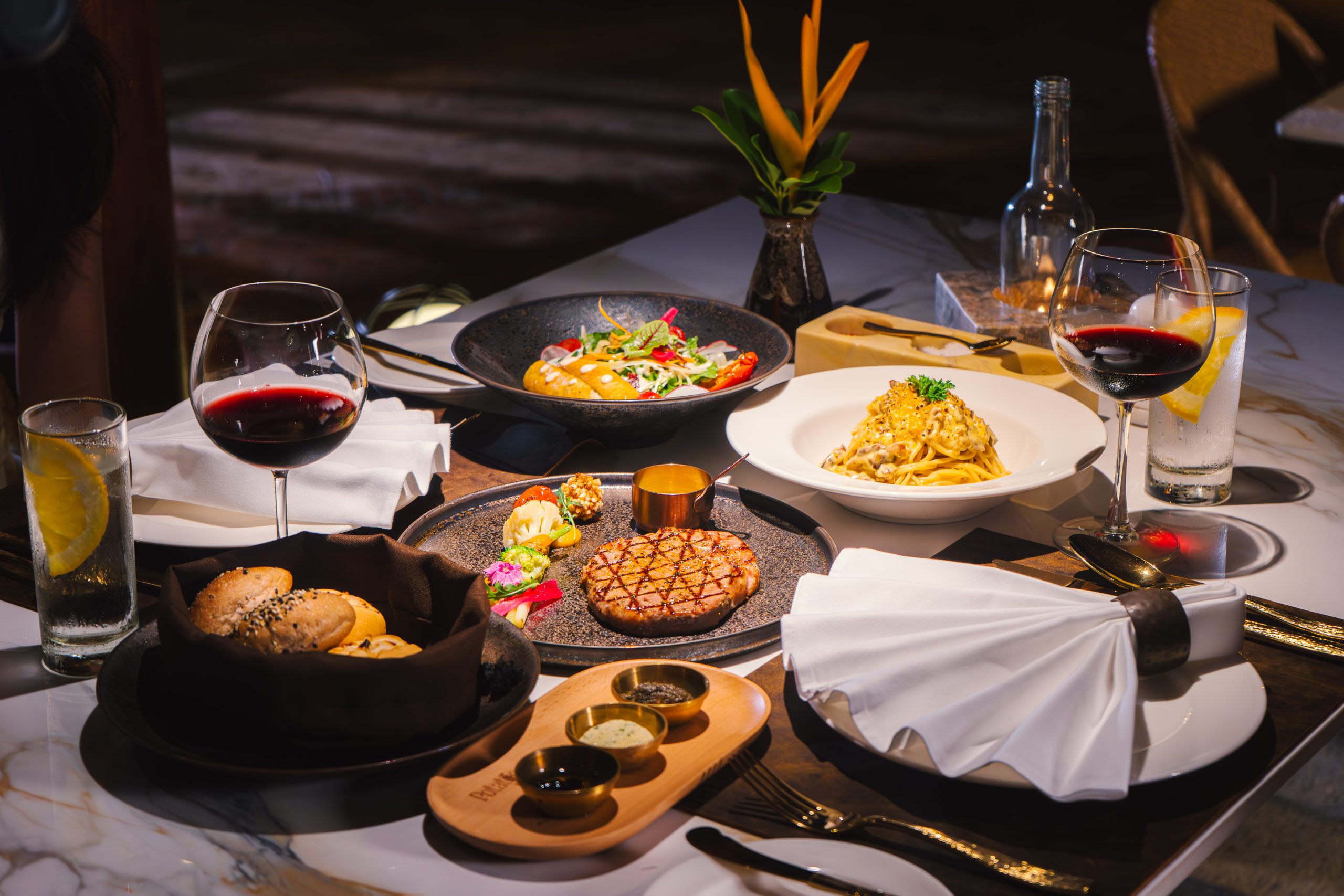
STEAK HOUSE THE FAN – ONE DESTINATION FOR THE COMPLETE BEACHFRONT EXPERIENCE IN DA NANG
When searching for a dinner spot in Da Nang, everyone has their own expectations. Some want to enjoy a delicious steak, some look for a table by the sea, some want to catch the sunset with a glass of wine, or simply a space special enough for a date for two.
But what if all those experiences could come together in a single evening?
That is how Steak House The Fan brings a different experience to the shores of Da Nang. It’s not just about steak; it connects cuisine, wine, sunsets, the ocean, and traditional Vietnamese art performances in one journey – making a dinner much more than just a memorable experience.
Steak House The Fan – When dinner is more than just a meal
At Steak House The Fan, dinner begins before the first dish is served. Located within the Furama Resort Da Nang premises, the restaurant features an outdoor space facing the sea, where cuisine, scenery, and entertainment experiences blend into the rhythm of an evening by the ocean.
From the sunset and sea breeze to the steak and wine on the table, every detail contributes to an experience more complete than just a meal.
Address: 103–105 Vo Nguyen Giap, Ngu Hanh Son District, Da Nang City
Opening hours: 18:30 – 22:30 daily.
An open space just steps away from the ocean
There are no walls separating the dining tables from the sea. At Steak House The Fan, tables are set in an open space, with a green lawn stretching past coconut trees and leading straight to the Da Nang coastline.
As evening falls, the sea breeze drifts through the tables, the sound of waves blends into the atmosphere, and the horizon is always in sight. It is this proximity—just steps from the ocean—that creates the unique character of dining by the sea in Da Nang: close to nature yet maintaining the privacy and sophistication of an evening at Steak House The Fan.
Sunset – the first “appetizer” of the evening
Golden moments by the sea
Before the first dish appears on the table, Steak House The Fan offers another “appetizer” for guests: the sunset. From the clear blue sky of the afternoon, the atmosphere gradually shifts to shades of golden pink, then the colors of the day’s end stretch across the sea before giving way to the warm lights of the evening.
Sitting at an outdoor table, ordering a glass of wine or a cocktail, and watching the scenery change by the minute is all part of the sunset dining experience in Da Nang.

Why should you arrive at Steak House The Fan before sunset?
To fully enjoy the experience at Steak House The Fan, spend a little extra time before dinner rather than arriving exactly at mealtime. Arriving early allows you to leisurely choose an outdoor table, enjoy the seaside atmosphere, and start the evening with an aperitif, cocktail, or glass of wine as the sun slowly dips below the horizon.
When the sunset fades and the lights are lit, it’s time to slowly transition into dinner. It’s a simple way to turn going out for steak in Da Nang into an entire evening by the sea worth savoring.
Steak – the centerpiece of the table
A premium steak experience at Steak House The Fan
Amidst the many layers of a seaside evening, steak remains the centerpiece at Steak House The Fan. From the impressive CAB USDA Tomahawk to the Australian MB3+ Striploin, ingredients are carefully selected and cooked to the perfect level of doneness to preserve the texture, juiciness, and characteristic flavor of each cut.

The experience also lies in how guests choose their level of doneness, paired with their favorite sauce and a suitable glass of wine. Without needing too much fanfare, a precisely prepared steak, a glass of wine, and the ocean right before your eyes are enough to create a unique mark for a seaside steak experience in Da Nang.
Một thực đơn đa dạng hơn cả bít tết
Steak is the centerpiece, but not the limit of the experience at Steak House The Fan. The menu expands with many options so that every table can find its own rhythm of enjoyment, from elegant pan-seared Norwegian Salmon and deep-flavored grilled Rougie foie gras with lemongrass, to fresh The Fan-style Salad or light pumpkin cream soup with pan-seared shrimp to start.
Additionally, there are choices of pasta, seafood, and desserts to complete the journey from appetizer to the final aftertaste. As a result, a dinner at Steak House The Fan is not just for steak lovers, but is diverse enough for everyone at the same table to choose flavors according to their own preferences.

When Vietnamese culture becomes part of the dinner
As the sunset fades and the lights gradually illuminate Steak House The Fan, another layer of experience begins. Amidst the international-style steakhouse setting and the ocean right in front, traditional Vietnamese dance performances appear as a sophisticated cultural touchpoint, allowing guests to enjoy steak and wine while feeling a very distinct Vietnamese essence in the evening. The intersection of Western cuisine, Vietnamese culture, and the seaside resort atmosphere creates the unique character of Steak House The Fan, especially for international tourists seeking a culinary experience in Da Nang that goes beyond the food on the table.

One evening, many complete experiences
A memorable dinner is sometimes created not just by the food, but also by the scenery, sounds, and moments happening around the table. At Steak House The Fan, the flavor of the steak is complemented by a glass of wine, the sunset falls over the sea, the ocean breeze drifts through the open space, and traditional Vietnamese art performances create a graceful cultural touchpoint.
All converge in one evening by the sea – a place where you might come for a steak, but leave with much more than an experience to remember about Da Nang.