






My Son Sanctuary: A Guide To Visiting The Unesco World Heritage Site
Nestled deep within a narrow valley about two kilometers in diameter, surrounded by majestic mountains and guarded by the sacred Mount Chua, My Son Sanctuary appears like a contemplative painting of time. As the religious and royal capital of the ancient Champa kingdom, this site is not merely moss-covered ruins, but an open-air architectural museum preserving the unsolved mysteries of a once-brilliant civilization. Recognized by UNESCO as a World Cultural Heritage site in 1999, My Son has today become an unmissable destination for those passionate about history, art, and mystical spiritual values.
Geographical Location and Overview of the Champa Dynasty History
My Son Sanctuary is located in Thu Bon commune, Da Nang city, about 69km from the center of Da Nang and about 45km from Hoi An ancient town. This location was not a coincidence. According to the beliefs of the ancient Cham people, the My Son valley, with its terrain surrounded by rolling mountains, is a symbol of the world of the gods, a place where the sacred energy of mountains and rivers converges to be offered to the Hindu deities, especially Lord Shiva – the creator and destroyer.
The history of My Son began in the 4th century under the reign of King Bhadravarman. He built the first wooden temple to worship Shiva-Bhadresvara. Although this wooden temple was destroyed in a great fire in the 6th century, subsequent kings continuously rebuilt and constructed a series of new temple towers using fired bricks—a durable material that has challenged time for over a millennium. By the 13th century, My Son had developed into a massive architectural complex with more than 70 temple towers, serving as a center for royal worship, a place for coronation ceremonies, and the final resting place for Champa kings and royalty.
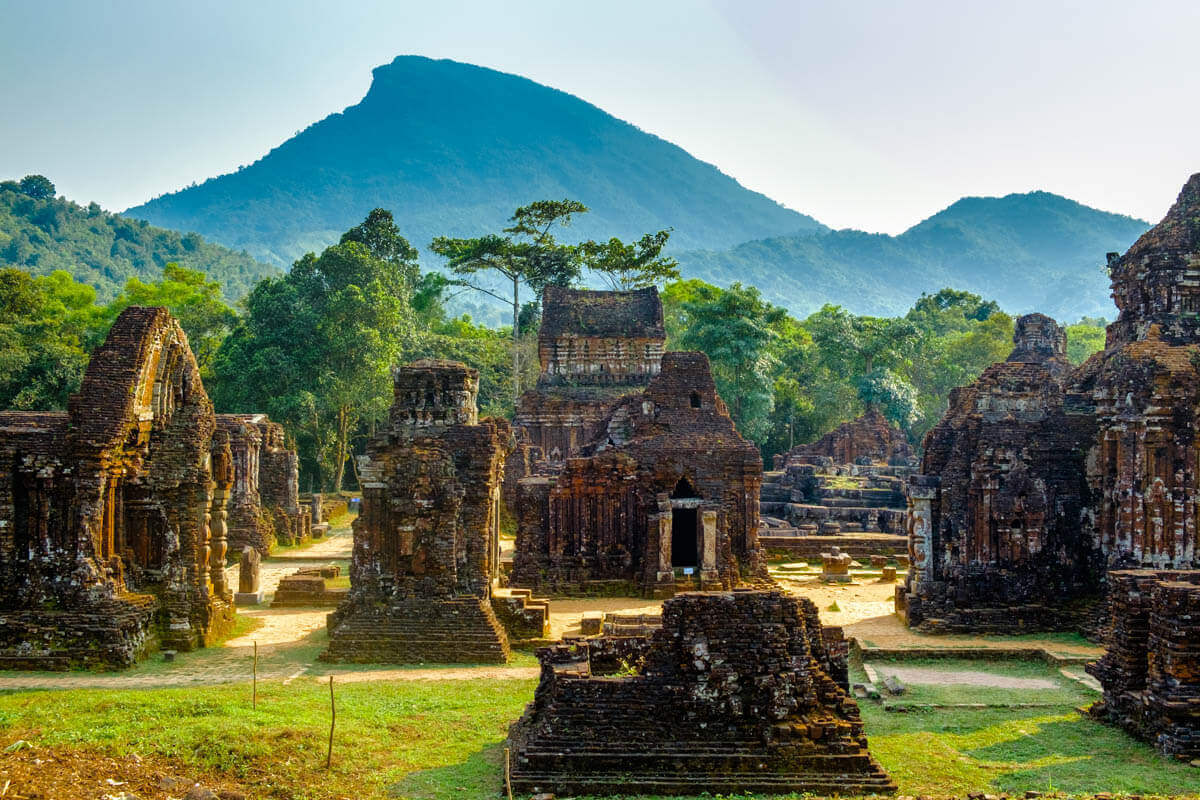
The Mystery of Brick Architecture Without Binding Materials
The greatest attraction of My Son Sanctuary for archaeologists and international tourists is the temple-building technique of the ancient Cham people. The towers here were built with bright red fired bricks, stacked tightly together without any visible trace of mortar or any common binding material. Over centuries of war and the harsh climate of Central Vietnam, those brick walls still stand firm; moss only lightly clings to the exterior and cannot decay the internal structure.
Many hypotheses have been proposed to explain this miracle. Some studies suggest that the Cham people used a type of glue refined from a plant species abundant in the area around the My Son heritage site, which locals often call the “dau rai” tree (Dipterocarpus alatus). Others believe they stacked raw (unfired) bricks and then proceeded to fire the entire massive tower block. Whichever method was used, the sophistication in grinding the bricks to fit perfectly and the technique of carving directly onto the surface of the fired brick walls demonstrate the pinnacle of aesthetic and construction skills of the ancient Cham people—a craft that has been lost and remains a major challenge for modern restoration work today.

Suggested Itinerary: 1-Day My Son Heritage Journey
To fully enjoy the mystical beauty and sacred atmosphere of the sanctuary, a delicately designed itinerary combining nature, culture, and cuisine will be the perfect choice for you.
07:30 – Departure from Hoi An Ancient Town
Start your morning while the mist still lingers over the mossy tiled roofs of Hoi An. A vehicle will take you through the peaceful rural roads of Quang Nam, where there are lush green bamboo groves and rice fields fragrant with the scent of young seedlings. Traveling early in the morning helps you avoid the intense heat of Central Vietnam and catch the first rays of sunlight filtering through the leaves at the sanctuary.
08:30 – Entering the Sanctuary, Listening to the Echoes of the Past
Upon reaching the gate of the relic site, you will transfer to an electric shuttle to go deep into the valley. The following walking path under the cool forest canopy will completely separate you from the noisy world outside. As tower groups A, B, C, and D gradually appear amidst the wild bushes, you will be amazed by the contemplative and majestic appearance of the red brick blocks contrasting brilliantly with the deep green of the forest. Take time to stroll leisurely, lightly touching the cool brick walls to feel the breath of history.
10:15 – Enjoying the Legendary Apsara Dance
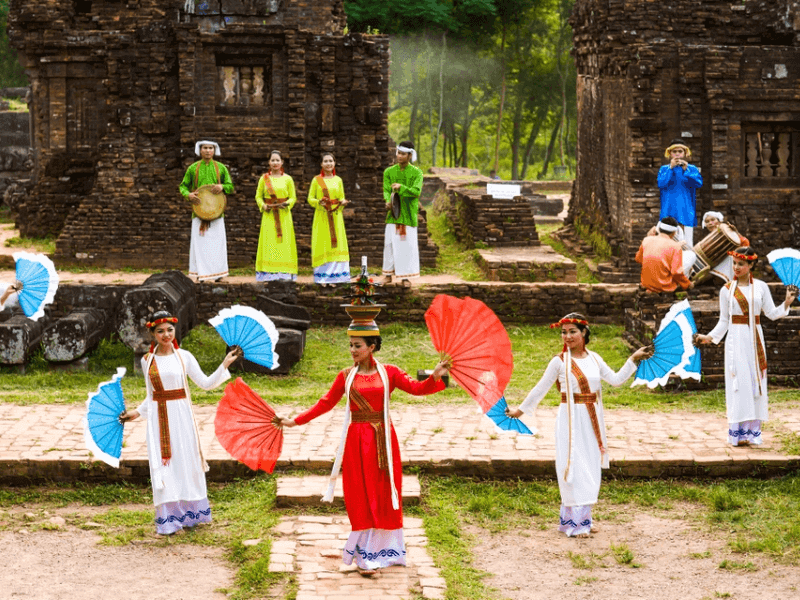
At the folk performance house within the relic grounds, the piercing sound of the Saranai trumpet combined with the rhythmic beat of the Paranung drum will lead you into a unique Champa artistic space. Beautiful dancers in vibrant traditional costumes, with graceful curves and soft hands, will recreate the ancient Apsara dance—a dance once reserved exclusively for the gods in solemn ancient rituals.
12:30 – Savoring the Rich Flavors of Quang Nam Cuisine
After your walking exploration, stop at a local restaurant near the My Son area or on the way back to enjoy famous specialty dishes. A flavorful bowl of Mi Quang (Quang Noodles) with chewy, soft noodles, a sweet broth from shrimp and pork, served with crispy grilled rice paper and fresh Tra Que vegetables will be a wonderful source of energy to conclude an emotional morning of experience.
Practical Tips for a Perfect Trip
To ensure your pilgrimage to the holy land goes smoothly and memorably, you should take note of these extremely useful practical tips:
1. The Ideal Time
Da Nang’s weather is divided into two distinct seasons. The period from February to August is the dry season, with beautiful sunny weather, extremely suitable for photography and outdoor travel. However, the ideal time of day to visit is early morning (around 6:30 – 8:00) or late afternoon (after 15:30). At these times, the slanted sunlight creates magical light and shadow patterns on the temple towers, and the air is also much cooler and more pleasant.
2. Means of Transportation
You can easily reach My Son by various means:
- Motorbike: Suitable for those who love backpacking and want the freedom to explore and sightsee along the way. The route from Hoi An or Da Nang to My Son is very easy to travel and has detailed signposts.
- Private car or taxi rental: The optimal choice for families with elderly people or small children, ensuring comfort, safety, and avoiding the sweltering sun of Central Vietnam.
- Daily group tours: There are many tours departing from Da Nang or Hoi An that include shuttle buses, entrance tickets, a tour guide, and lunch at a very reasonable cost.
3. Clothing and Accessories
My Son is a sacred religious sanctuary; therefore, you should wear polite, discreet clothing (sleeved shirts, pants or skirts below the knee). Bring a wide-brimmed hat, sunscreen, sunglasses, and a bottle of mineral water to stay hydrated while walking. A pair of comfortable sneakers or flat shoes will be an indispensable companion for you to confidently step along the natural stone paths.
Finding Inner Peace Amidst the Sacred Valley
As the sunset falls, dyeing the thousand-year-old fired bricks red and casting long, proud shadows onto the green grass, My Son Sanctuary becomes quieter and more sacred than ever. Standing in the middle of the windy valley, listening to the rustling of the forest blending with the whispers of the past, one suddenly realizes that the true value of heritage lies not just in massive physical structures, but in the enduring vitality of a culture and a timeless aesthetic mindset. My Son is not just a destination for checking in, but a place for us to calm our minds, reflect, and rediscover a deep connection with the noble human values of mankind.






Leave a Comment