






History And Legends Of Linh Ung Son Tra Pagoda: The Story Behind The Pagoda
Amidst the vast greenery of the Son Tra Peninsula, where the mountains and forests embrace the East Sea, Linh Ung Son Tra Pagoda emerges as a peaceful spiritual anchor for Da Nang city. Every year, millions of tourists and Buddhists come here not only to worship the famous 67-meter-high Lady Buddha statue but also to find peace amidst majestic nature.
Few know that behind the majestic beauty of the pagoda is a journey spanning from folk legends and the beliefs of coastal residents to the formation of an important Buddhist center in Central Vietnam. These stories have contributed to creating a special value that makes Linh Ung Son Tra Pagoda more than just a sightseeing spot, but a cultural and spiritual symbol of Da Nang.
The History of the Formation of Linh Ung Son Tra Pagoda
The history of Linh Ung Son Tra Pagoda did not begin with architectural designs or a groundbreaking ceremony, but originated from the faith of coastal people over many generations.
According to local legend, during the reign of King Minh Mang of the Nguyen Dynasty, on a day when the sea was rough, locals discovered a Buddha statue drifting onto the shore at the foot of the Son Tra Peninsula. For fishermen who spent their lives at sea, this was seen as a good omen bestowed by the Dharma. They believed the appearance of the statue would bring peace, calm the waves, and protect their voyages.
From that belief, a small shrine was erected right where the statue was found. People regularly came to burn incense on the full moon, the first day of the lunar month, and before every sea voyage. Over time, this area was called Bai But, meaning “the place where the Buddha resides in the human world.” That name still exists today and has become an inseparable part of the story of Linh Ung Son Tra Pagoda.
For decades, the shrine, though simple, was always the spiritual anchor for coastal residents. In their consciousness, Buddha was not only a symbol of compassion but also a protector against the unpredictable changes of nature. This persistent religious life laid the foundation for building a larger-scale pagoda in the future.
In the early 2000s, along with the strong development of Da Nang city, the local government and the Vietnam Buddhist Sangha wished to build a spiritual project worthy of the Son Tra Peninsula. Not only serving the religious needs of the people, the project also contributed to preserving Buddhist cultural identity and creating a highlight for the city’s spiritual tourism. On the 19th day of the 6th lunar month in 2004, Linh Ung Son Tra Pagoda was officially started under the presidency of Most Venerable Thich Thien Nguyen. After nearly six years of construction with the joint efforts of monks, nuns, Buddhists, sponsors, and the local government, the pagoda was inaugurated in 2010.
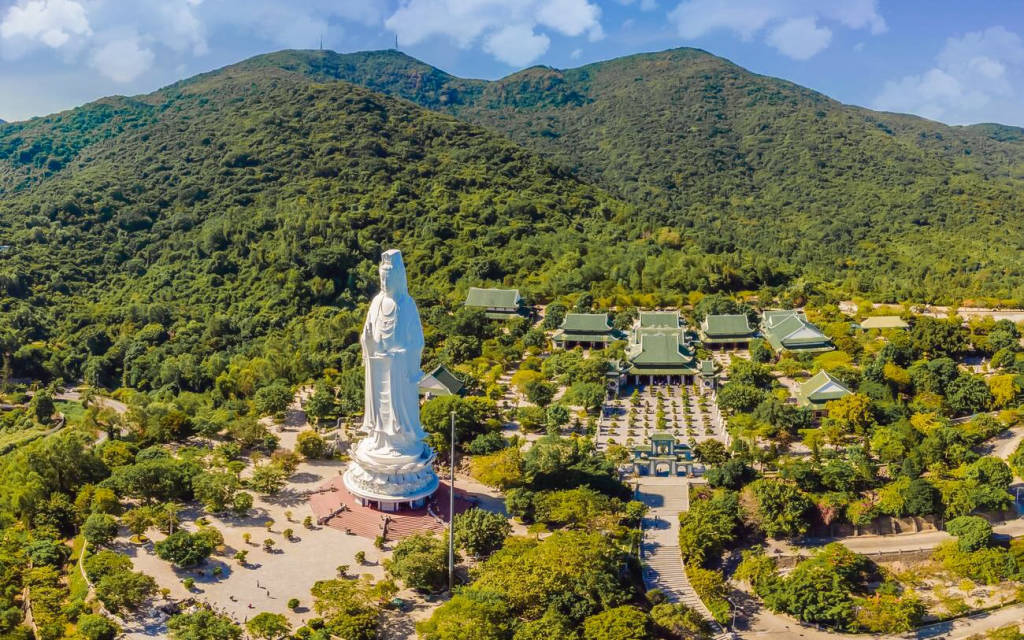
From a small shrine of fishermen, Linh Ung Son Tra Pagoda has become a Buddhist complex of nearly 20 hectares, located in what is considered one of the most beautiful positions in Da Nang with its back against the mountain and facing the sea. Behind it is the lush green Son Tra primary forest, and in front is the vast East Sea, creating a scene that is both majestic and serene.
The Legend of Linh Ung Son Tra Pagoda and the Meaning of the Name “Linh Ung”
The name “Linh Ung” means “sacred and miraculous.” In Buddhist concept, this is the response to sincere prayers of humans through the compassion and protection of the Buddhas.
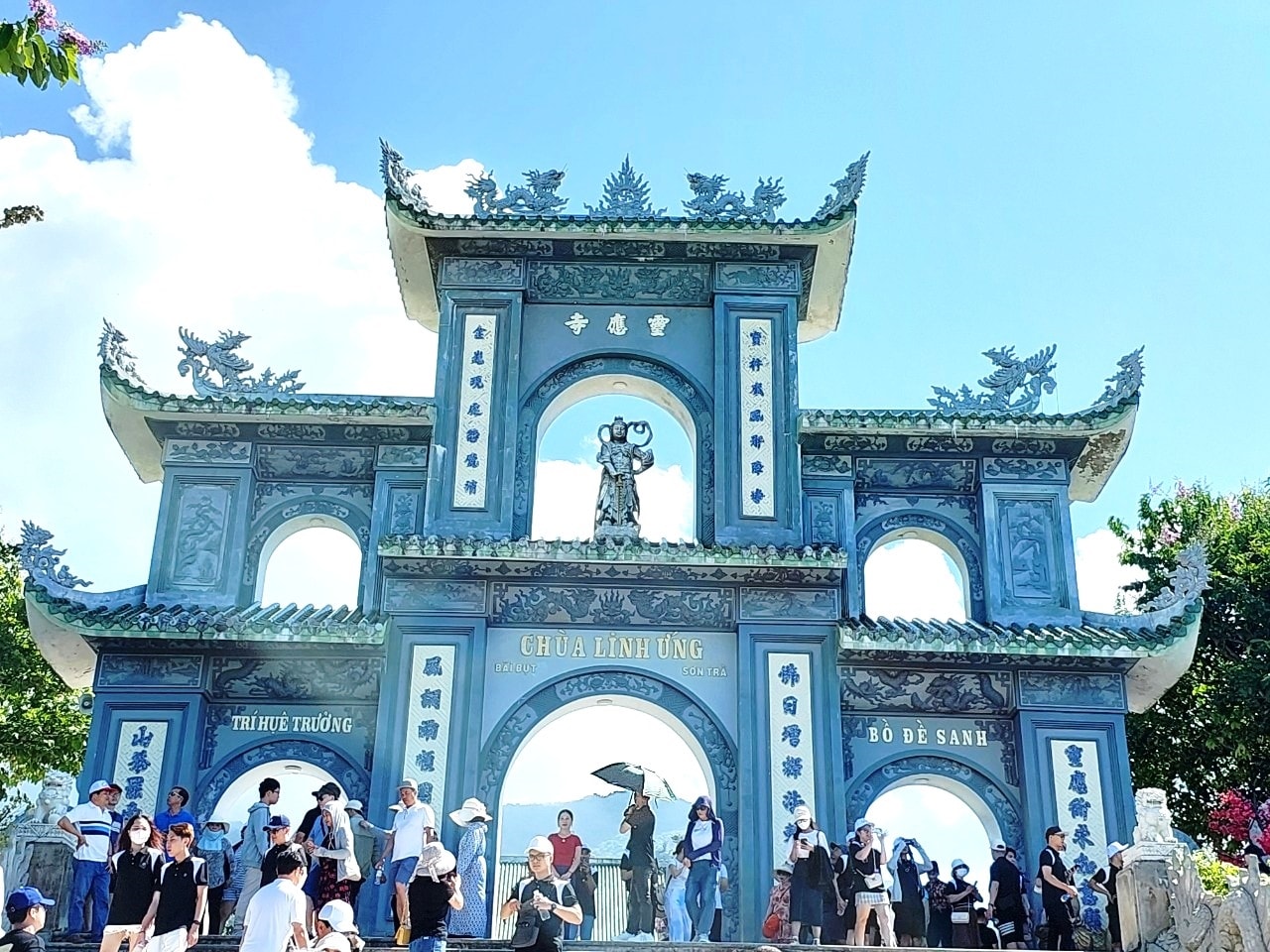
For the people of Da Nang, the name is also associated with the legend of the Buddha statue drifting into Bai But. They believe that since the shrine was built, the lives of fishermen have become more favorable, voyages safer, and natural disasters less severe. Although this is a folk story without verified historical documents, it has been preserved through generations as part of the local cultural memory.
In addition, Da Nang also possesses three pagodas sharing the name Linh Ung, including Linh Ung Son Tra, Linh Ung Non Nuoc, and Linh Ung Ba Na. In folk belief, the three pagodas form a “spiritual triangle,” likened to three anchors protecting the city from the sea, the mountains, and the highlands.
The Architecture of Linh Ung Son Tra Pagoda Bears the Deep Imprint of Vietnamese Buddhism
One of the points that makes Linh Ung Son Tra Pagoda special is the harmonious combination of traditional architecture and natural landscape. The entire complex was built according to the philosophy of “leaning against the mountain, facing the sea,” taking advantage of the natural terrain of the Son Tra Peninsula to create an open, airy space while still maintaining the necessary solemnity of a pagoda.
The main hall stands out with its traditional curved tiled roof, large wooden column system, and patterns deeply imbued with Vietnamese Buddhist architectural style. Inside, Shakyamuni Buddha and Bodhisattvas are worshipped, creating a solemn space for Buddhists and tourists to pay their respects.
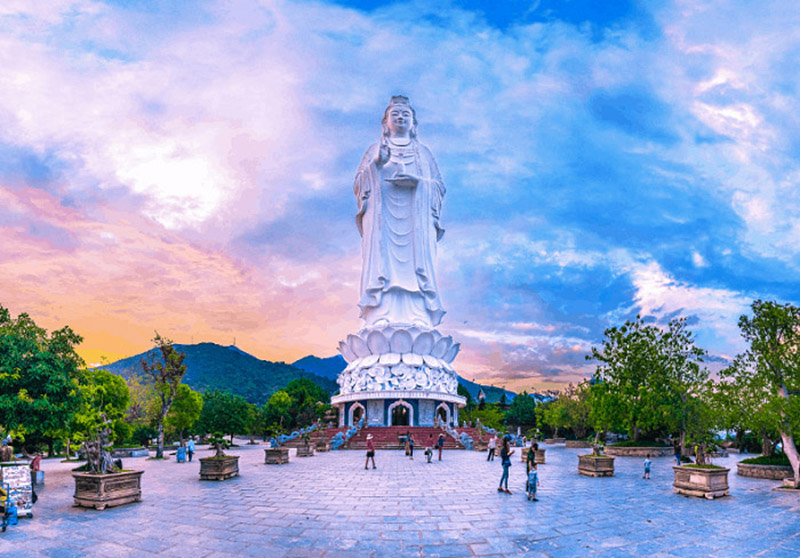
The most prominent highlight of the complex is the 67-meter-high Lady Buddha statue, considered one of the tallest Avalokitesvara statues in Vietnam. The statue faces the East Sea as a symbol of compassion and protection for the residents of the central coastal region.
In addition to the main hall, the pagoda grounds also feature an Arhat statue garden, a bell tower, green spaces, and many other auxiliary works, creating a harmonious whole between architecture and nature.
Linh Ung Son Tra Pagoda in the Cultural Life of Da Nang People
For the people of Da Nang, Linh Ung Son Tra Pagoda is not only a place to worship Buddha but also a part of the community’s spiritual life. Every New Year, full moon, first day of the lunar month, or major Buddhist festivals such as Vesak and the Avalokitesvara festival, thousands of residents and tourists come here to pray for peace, health, and luck.
Especially for coastal residents, the image of Lady Buddha facing the ocean signifies protection for offshore fishing trips. Before each sea season, many fishermen still maintain the habit of coming to the pagoda to offer incense and pray for a year of favorable weather. Not only a place for religious activities, Linh Ung Son Tra Pagoda also contributes to promoting the image of Da Nang as a destination combining relaxation, nature, and spiritual tourism.
Important Milestones in the Development Process
In its journey of formation and development, Linh Ung Son Tra Pagoda has marked many memorable milestones:
- 19th Century: The legend of the Buddha statue drifting into Bai But appeared, forming the fishermen’s shrine.
- 2004: Officially started the construction of the Linh Ung Son Tra Pagoda complex.
- 2010: Inaugurated the project after nearly six years of construction.
- Currently: Has become one of the prominent spiritual and tourist destinations of Da Nang, attracting millions of visitors every year.
Linh Ung Son Tra Pagoda – A Symbol of Faith and the Coastal City
Amidst the modern pace of life in Da Nang, Linh Ung Son Tra Pagoda still maintains its inherent tranquility and sanctity. More than just an architectural work, this place is the crystallization of history, belief, and the cultural life of Central Vietnamese people over many generations.
Whether coming to learn about history, worship, or simply enjoy the peaceful space amidst nature, every visitor can feel the enduring vitality of this pagoda. It is the stories passed down through time, along with the cultural and spiritual values preserved until today, that have helped Linh Ung Son Tra Pagoda become one of the most unique symbols of Da Nang and a must-visit stop in the journey to explore the coastal city.






Leave a Comment