






Discover The Da Nang Museum Of Cham Sculpture And Champa Cultural Heritage
Da Nang is known for its beautiful beaches, iconic bridges, and modern pace of life. However, hidden behind that dynamic appearance is a layer of cultural sediment spanning centuries, associated with the mark of the Champa Kingdom. To better understand the history of the Central region, the Da Nang Museum of Cham Sculpture is a destination not to be missed.
This place preserves the largest collection of Champa artifacts in Vietnam, helping visitors explore the sculpture, beliefs, and life of a civilization that once flourished along the Central coast. After visiting the museum, many tourists also choose to stay at resorts with local cultural flair to continue feeling the beauty of the heritage in a more intimate way.
Cham Sculpture Museum – The Gateway to Champa Civilization
Not many cities in Vietnam possess a specialized museum for an ancient civilization on such a large scale as Da Nang. The Cham Sculpture Museum was built in the early 20th century following the proposal of French archaeologists after a series of Champa artifacts were discovered in My Son, Tra Kieu, Dong Duong, and many other locations in Central Vietnam. The building officially opened in 1919 and has since become the only museum in the world specialized in researching and displaying Champa sculpture.
The special feature of the museum lies in the fact that artifacts are not simply arranged chronologically but also by each Champa cultural center. This makes it easy for viewers to follow the development of sculpture through each historical period.
Currently, the museum preserves more than 2,000 artifacts, of which about 500 works are regularly displayed. Most are crafted from sandstone – a common material in Champa architecture and sculpture – with ages spanning from the 7th to the 15th centuries. Each work reflects the artistic level, crafting techniques, as well as the rich spiritual life of Champa residents over many centuries.
Champa Sculpture Art – The Intersection of Belief and Aesthetics
One of the reasons why the Cham Museum is highly appreciated by international researchers is the artistic value of the works.
Unlike many ancient sculpture traditions in Southeast Asia, Champa art was deeply influenced by Hinduism but did not copy it completely. The Cham people created their own style with strong lines, rich expression, and a deep local breath.
Statues of Shiva, Brahma, Vishnu, or Ganesha all show a balance between majesty and softness in form. Apsara statues with graceful dancing poses or reliefs retelling the Ramayana and Mahabharata epics also show the ability to tell stories through shapes very delicately.
In particular, many artifacts also reflect the development of each Champa art school such as My Son, Dong Duong, Tra Kieu, or Thap Mam. Each style carries its own characteristics in body proportions, decorative patterns, and volume-shaping techniques, contributing to the diverse appearance of Champa art over centuries.
Outstanding Artifacts at the Museum
The museum is divided into many galleries according to each archaeological area, helping viewers easily follow the development of Champa art through each period.
Tra Kieu Altar
This is one of the most famous masterpieces of Champa sculpture. The exquisitely carved reliefs recreate stories from Indian mythology, reflecting the deep influence of Hinduism on the Champa kingdom.
.png)
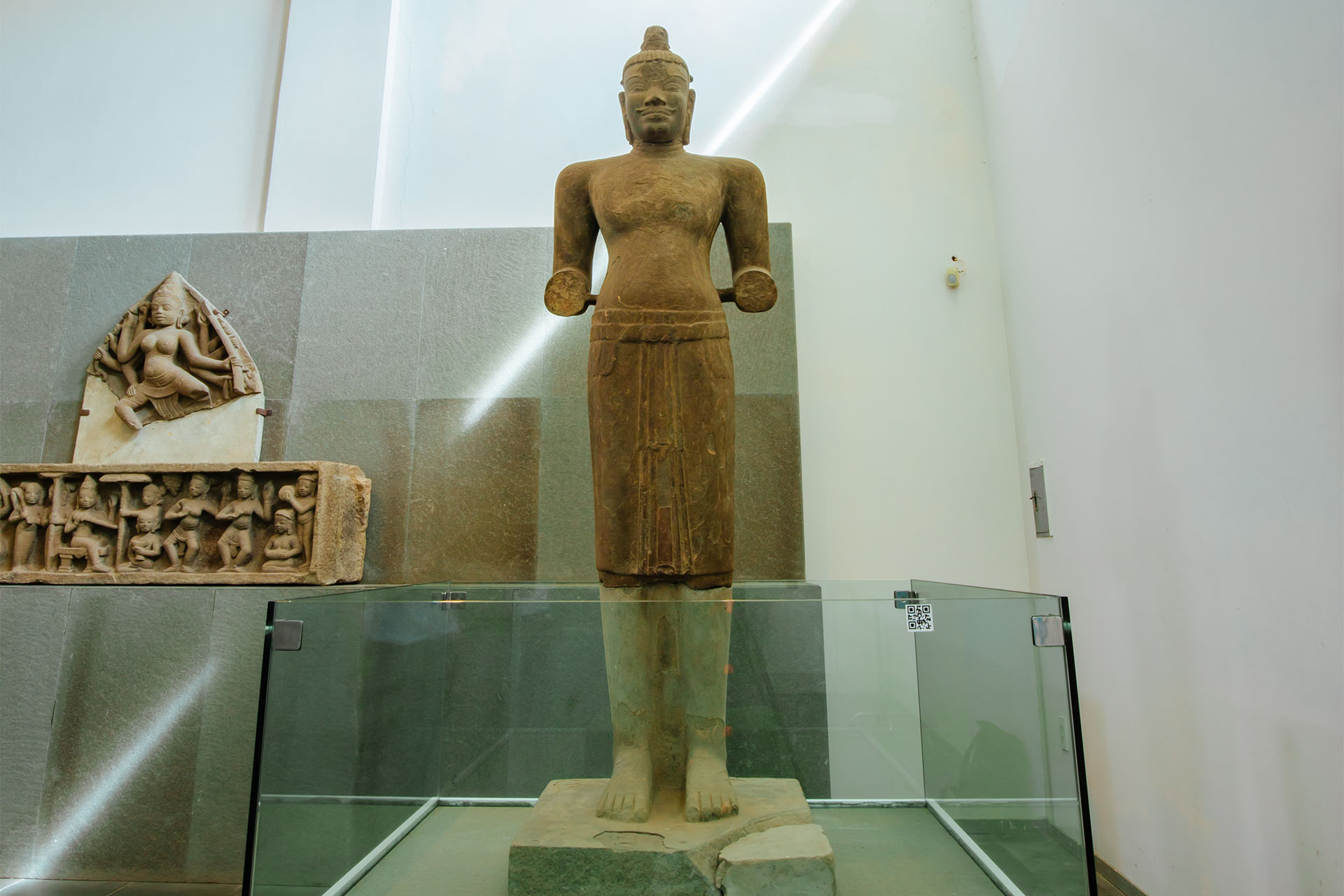
Statue of Lord Shiva
Shiva is one of the three supreme gods of Hinduism and appears with high density in Champa art. The statues show the power, creativity, and rebirth of the universe through soft but powerful sculptural lines.
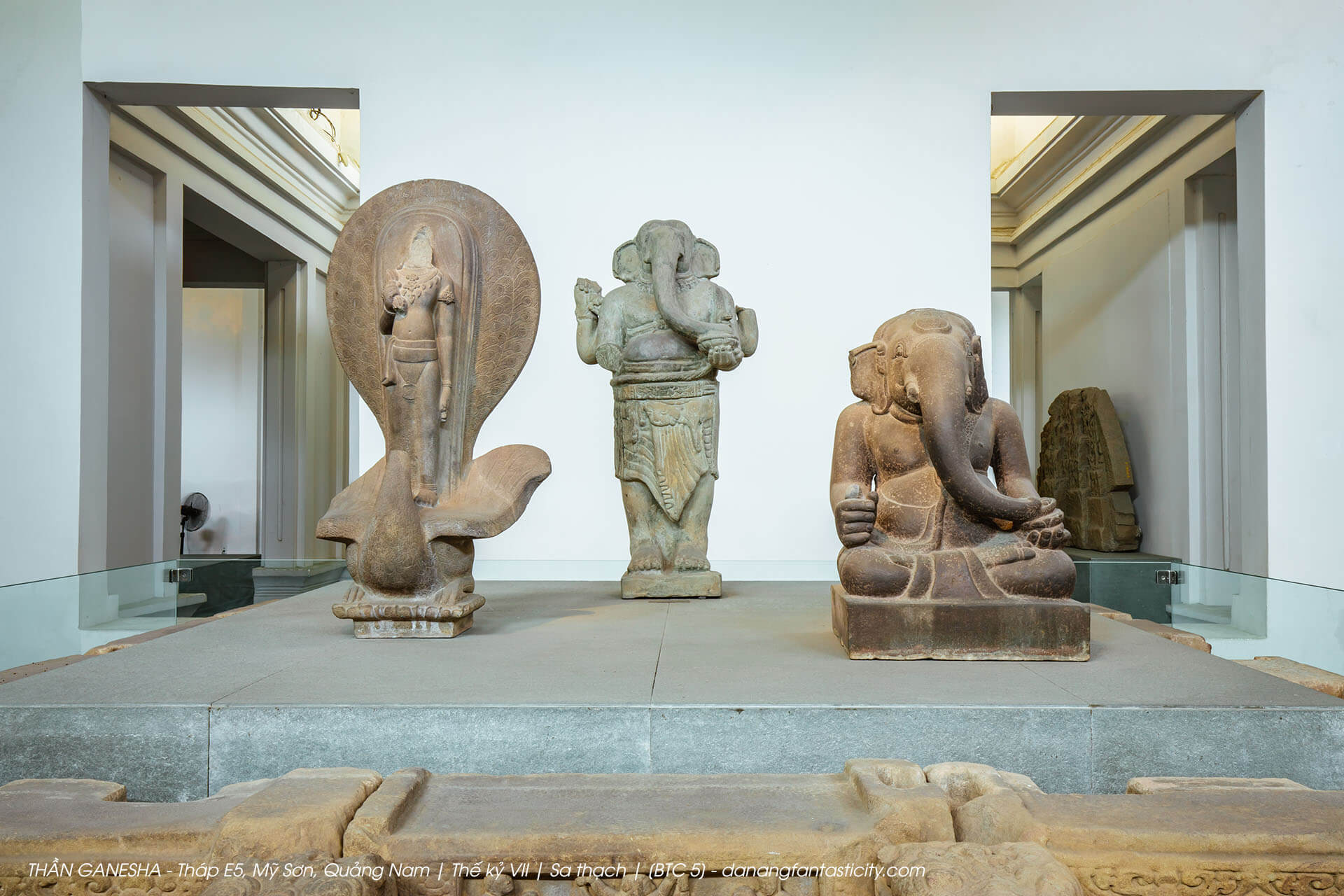
Ganesha Statue
The image of the elephant-headed god Ganesha carries the meaning of wisdom and luck. This is also one of the artifacts loved by many international tourists when visiting the museum.
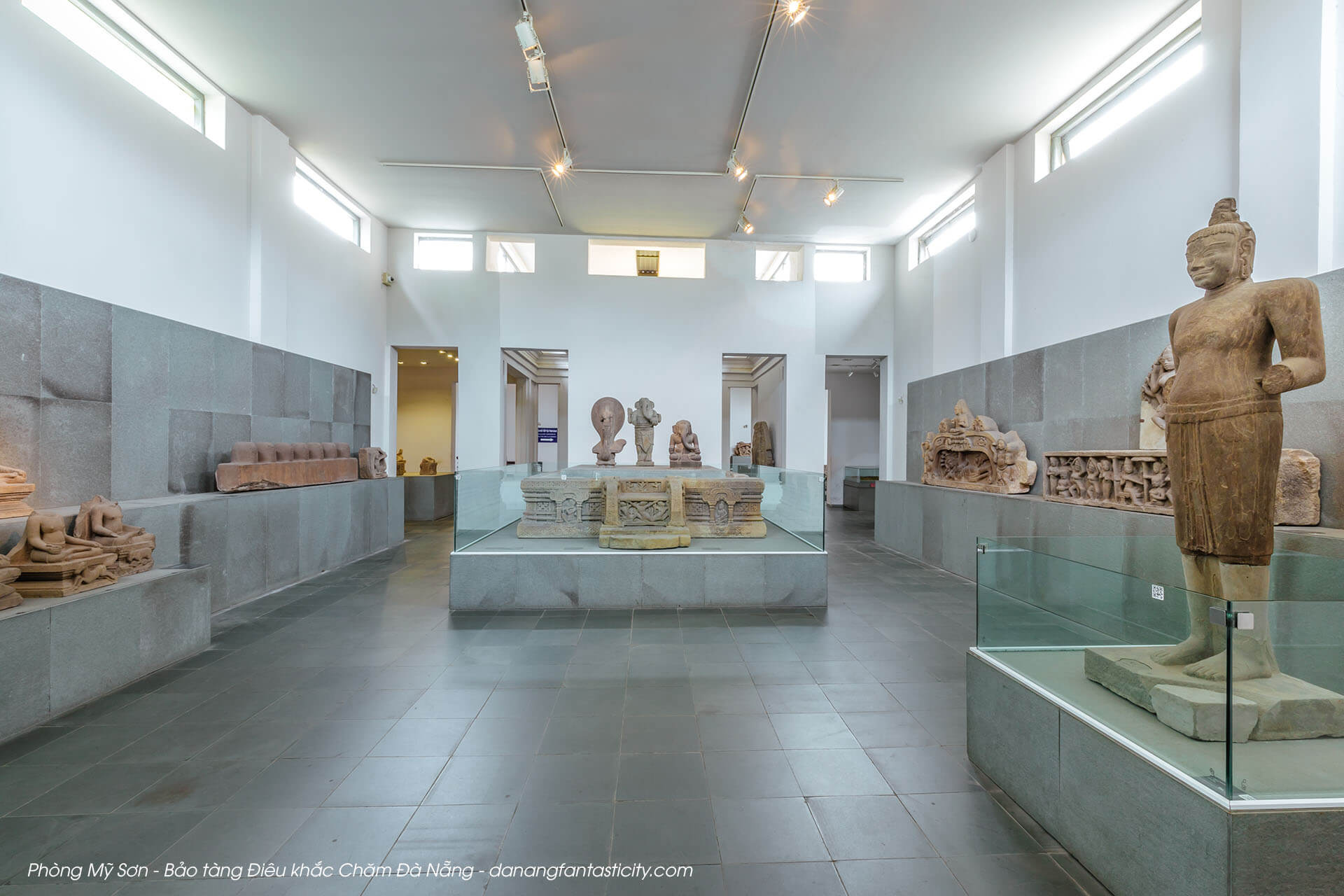
My Son Collection
Artifacts excavated from the My Son Sanctuary show the stone-crafting level and unique construction techniques of the ancient Cham people. This is also an area evaluated by many researchers as having special historical and artistic value.
Why Does Champa Culture Still Exist in Da Nang Today?
Although the Champa Kingdom has receded into history, the cultural values left by this civilization are still clearly present in the appearance of Da Nang today. Besides the artifacts kept at the Cham Sculpture Museum or the remaining traces at archaeological sites, the spirit of Champa art continues to be inherited in modern architecture, fine arts, and space design. Lotus petal patterns, stylized flowers and leaves, images of deities, or materials like sandstone, terracotta, and natural wood still appear in many works, creating a harmonious connection between traditional values and contemporary breath. This helps Champa culture not only be preserved as a heritage of the past but also continue to accompany the city’s development.
Da Nang is one of the few localities capable of harmonizing urban development and preserving cultural identity. Many hotels, resorts, and architectural works choose to exploit the lines, materials, and design philosophies of Champa art to create their own mark. Instead of copying ancient architecture exactly, architects apply the spirit of Champa culture through open spaces, connection with nature, and symbolic decorative details.
It is this continuity that helps Champa culture always exist in the life of Da Nang, instead of only existing in history books or galleries. After exploring the Cham Sculpture Museum, visitors can continue to feel the marks of the ancient civilization through architectural works, resort spaces, and many other cultural experiences in the city. It is a journey connecting the past with the present, where heritage is not only preserved but also retold in the language of contemporary architecture and art.
Champa Architectural Mark at Furama Villas Da Nang
Furama Villas Da Nang offers a private resort space where modern architecture is harmoniously combined with local cultural values. Instead of following the popular minimalist style, the villa complex incorporates many details inspired by Champa art, contributing to its own identity and helping each space carry the breath of Central Vietnam.
Within the grounds of Furama Villas Da Nang, visitors can encounter stone reliefs, carved patterns, decorative statues, and geometric lines in the Cham style subtly arranged in the overall architecture. Terracotta colors, natural wood materials, stone, and traditional tiled roof systems create a sense of closeness, while reminding of the beauty of the Champa temples that once flourished in the Central region.
After visiting the Da Nang Museum of Cham Sculpture, many tourists choose to stay at Furama Villas Da Nang to continue feeling the marks of Champa culture in a peaceful and private resort space. Here, traditional values are recreated through architecture, landscape, and every design detail, contributing to an identity-rich stay experience where local culture is naturally present in the modern resort lifestyle.

Pocket Experiences for a Complete Visit
To make your visit to the Da Nang Cham Museum perfect, please note some extremely useful practical experiences below:
Opening Hours & Ticket Prices: The museum is open to visitors from 7:30 to 17:00 daily (including holidays and Tet). The current entrance fee is around 60,000 VND/adult, with discount policies for pupils and students.
Attire when visiting: Although this is not an active place of worship, the museum displays many artifacts of a solemn religious nature (statues of Shiva, Vishnu, Brahma…). You should wear polite, discreet clothing, avoiding outfits that are too short or offensive.
Preserving moments: You are allowed to take souvenir photos at the museum, however, please remember to turn off the flash to maximize the protection of the surface of ancient stone artifacts. At the same time, do not arbitrarily touch the sculptures to avoid wearing down and deforming fragile artistic details.
Technology application: Don’t forget to scan the QR codes in the galleries to use the automatic narration system in multiple languages. This is a great way to help you deeply understand every carved detail without needing a guide to accompany you.
Fully Feeling the Beauty of Champa Heritage
Exploring the Cham Sculpture Museum is not simply a journey to admire the precious artifacts of an ancient civilization. It is also an opportunity to understand more deeply the history, art, and cultural values that have contributed to the unique identity of Central Vietnam. Each sandstone sculpture, each exquisite pattern, or each story associated with Champa temples opens up a vivid perspective on the culture that once flourished on this land.
After exploring the historical values at the museum, visitors can continue to feel the spirit of Champa art in the accommodation space at Furama Villas Da Nang. Architectural details inspired by Cham culture are harmoniously integrated into the villa design, landscape, and living space, creating a natural connection between heritage and the resort experience. It is this intersection that makes the journey to explore Da Nang more complete, as traditional values are still present and retold in the language of contemporary architecture.






Leave a Comment